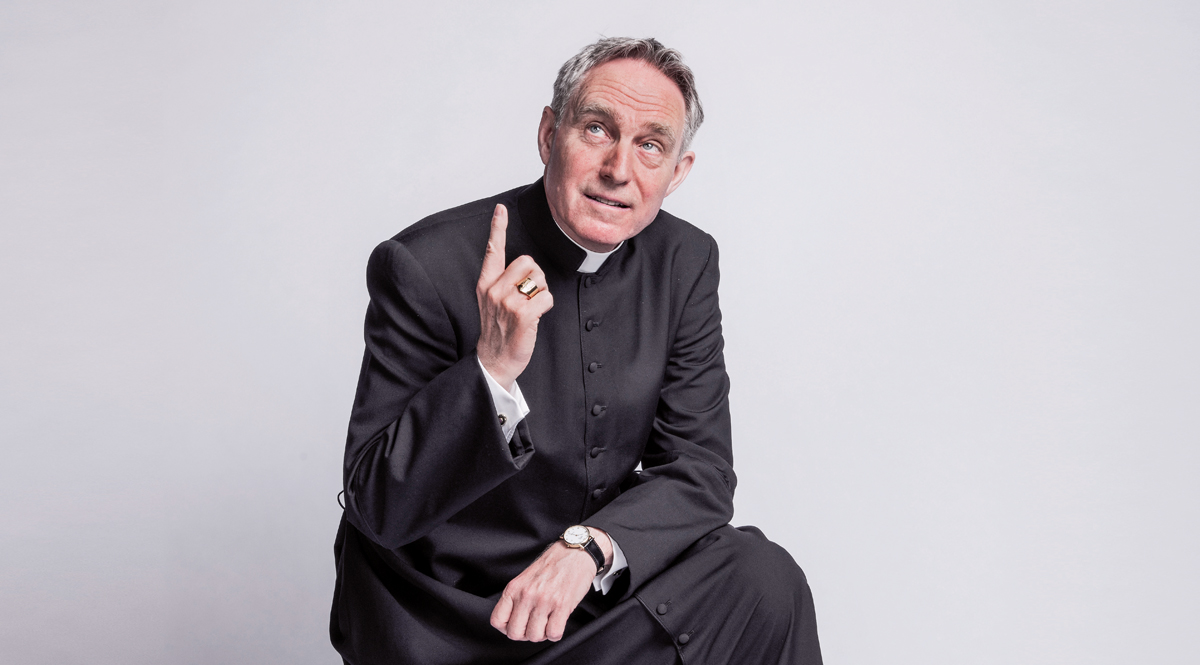
Vilnius – On the eve of his seventieth birthday, Archbishop Georg Gänswein looks back on the years he spent alongside Joseph Ratzinger, his service in the Papal Household and his current diplomatic mission in the Baltic states. In an interview with Renardo Schlegelmilch for domradio.de, the Apostolic Nuncio speaks about his personal relationship with Benedict XVI, his meetings with Donald Trump and Vladimir Putin, the tensions along Europe’s north-eastern frontier and the expectations raised by the pontificate of Leo XIV. Peace remains at the heart of his remarks: a message which, he says, can speak to the Baltic peoples today across denominational boundaries.
Journalist: You will celebrate your 70th birthday on 30 July. A great deal has happened over those seventy years: you grew up in the Black Forest, worked as personal secretary to Joseph Ratzinger and later Pope Benedict XVI, headed the Prefecture of the Papal Household under Francis and are now the Holy See’s diplomatic representative in the Baltic states. Which of these stages has had the most lasting impact on you?
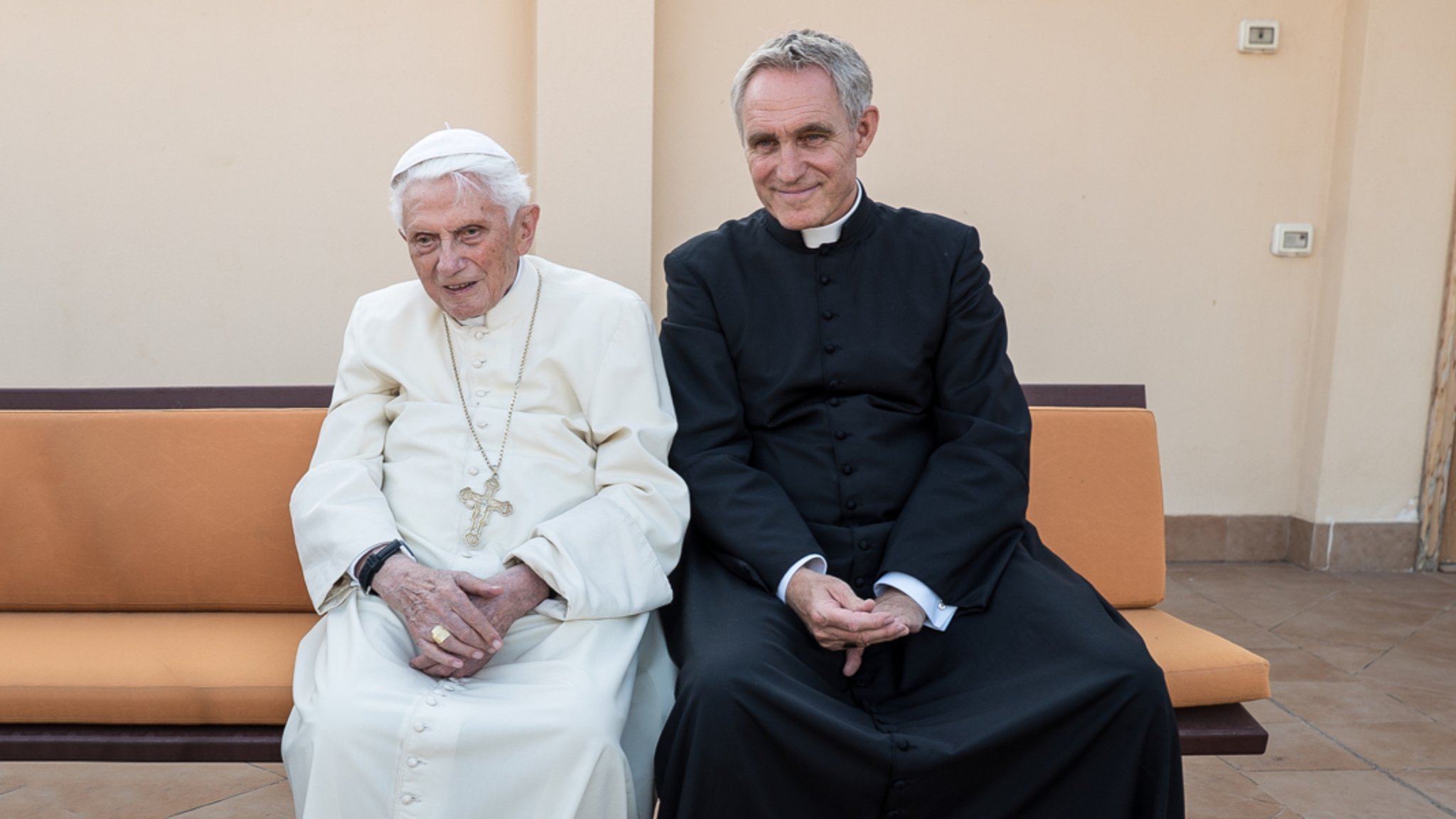
Georg Gänswein: Simply in terms of its duration, I would say my time in Rome. I spent 28 years in Rome, beginning with my work in the Curia as personal secretary to Cardinal Ratzinger, who was then Prefect. I later remained his personal secretary when he became Pope Benedict, and also when he was Pope Emeritus.
I also served in Rome as Prefect of the Papal Household. Those 28 years shaped me; that is quite clear. They were also the most dynamic years of my life.
Journalist: You were ordained a priest in Freiburg in 1984. What would you have thought if someone had described this path to you at the time?
Georg Gänswein: I had never imagined a path like this. I did not even know that many of its stages existed. Looking back, it is clear that something like this simply cannot be planned.
Journalist: As his personal secretary, you were more than simply a professional aide to Benedict XVI. You remained with the Pope Emeritus until his death. What kind of relationship was it?
Georg Gänswein: It developed over the course of many years. At first, it was indeed a professional relationship, when I was still secretary to the Prefect. It then became much closer when I became the Pope’s secretary.
We not only worked together, but also lived under the same roof and spent the entire day together, from morning until evening. Each of us in his own way and with his own responsibilities, of course, but that naturally leaves its mark. During the ten years following his resignation, our life together and our closeness became stronger still. The personal bond grew increasingly deep.
Journalist: How did working so closely with someone who played such an important role in the Church and in theology shape you?
Georg Gänswein: Before I met him personally, I had studied virtually everything Ratzinger the theologian had written. That was, so to speak, my first relationship with him, because I knew his theological positions, his work and his outlook. I knew his theological thought.
Meeting him personally naturally deepened and broadened that knowledge enormously. It was his person that shaped me most, and most profoundly. But I also made a conscious decision to allow myself to be shaped by him.
Journalist: Around the time of Pope Benedict’s resignation, you were appointed an archbishop and became Prefect of the Papal Household. This new role allowed you to work directly with two Popes, but also to meet presidents, prime ministers and monarchs from around the world. What was that period like for you?
Georg Gänswein: As the Pope’s secretary, I had already been through a kind of preparatory school, if I may put it rather informally. In that role, I had naturally already had indirect contact with figures of this kind. As Prefect of the Papal Household, however, it was my responsibility to receive them officially on behalf of the Pope. At first, I was rather nervous about the whole thing.
Gradually, I grew into the role and also found an inner way of dealing with it. I simply tried to be who I am: entirely natural and normal. Looking back, I think I can say that this worked reasonably well over the years.
Journalist: Is there a particular meeting or incident that you remember especially clearly?
Georg Gänswein: There were quite a few figures whom one knew from television. I am thinking, for example, of Trump during his first term, and also of Putin. Putin came twice. The first time, he visited Pope Benedict and I was present as his personal secretary. The second time, I was Prefect of the Papal Household.
Trump and Putin are two figures who left me with very different impressions. Seeing someone on a screen is one thing. Standing face to face with them, looking them in the eye and speaking to them is something entirely different. You then ask yourself: do they correspond to the image I had formed of them?
My impression of Trump was not borne out. On that occasion, he was very polite and also had a great sense of humour. With Putin, by contrast, I felt as though I were looking into the eyes of a refrigerator. His eyes were ice-cold, and they frightened me somewhat. Those were the experiences that left the strongest impression on me during my time as Prefect.
Journalist: You are now the Nuncio to the Baltic states. The Bundeswehr is establishing a brigade in Vilnius, and the conflict between Russia and Ukraine has placed this region firmly at the centre of global attention. How does this situation affect your work on the ground?
Georg Gänswein: To begin with what you mentioned explicitly: it is true that the Bundeswehr is establishing a brigade. This did not begin yesterday; the project has already been under way for three years. The brigade is expected to be fully established within five years, with around 5,000 soldiers and their families stationed in Lithuania. At present, that amounts to approximately 2,000 people, effectively a sizeable urban district. Work is in full swing.
It is clear that Germany and Lithuania have not always enjoyed the best of relations historically, particularly when one considers the period between 1941 and 1943 and the occupation by the National Socialists. Thanks to the task entrusted to the Bundeswehr, however, a relationship of friendship has developed, thank God. Lithuanians, and indeed all the Baltic peoples, are very grateful and pleased to receive this clear support from the Bundeswehr. The Bundeswehr and the brigade do not fall within my area of responsibility. I may be German, but I am not Germany’s ambassador. That is the responsibility of a colleague, and he does the job well. Naturally, through the military chaplaincy, I maintain informal and personal contacts.
Journalist: You represent the Holy See in Vilnius. What role does the Vatican play in this context?
Georg Gänswein: The Holy See has maintained diplomatic relations with the three Baltic countries for more than a hundred years. Although these countries are small, the presence of the Catholic Church plays an important role.
This is particularly so because they are situated on Europe’s north-eastern flank, at the heart of this conflict or, at any rate, along its frontier. I experience that first-hand every day. It shapes people’s outlook and places them under considerable pressure.
Journalist: Is this situation reflected in people’s spirituality and faith? Are there differences between the three Baltic states of Estonia, Latvia and Lithuania?
Georg Gänswein: In Lithuania, Catholics account for around 80 per cent of the population. Latvia, with its three million inhabitants, has more than two million Catholics. Estonia has a population of one million, of whom only around 8,000 or 9,000 are Catholic. Nevertheless, the presence of the Church can also be felt beyond denominational boundaries.
The Holy See is the symbol of a universal Church. That is its great advantage and its great strength. The Holy See and the Pope also provide a great deal of impetus. Through diplomacy, too, far more is done behind the scenes than could be achieved openly. I can now confirm that myself, because I am one of those working in this field.
Journalist: You served two Popes directly and now carry out your mission as Nuncio under a third, Pope Leo XIV. Do you have the impression that diplomacy has gained new momentum under the new Pope?
Georg Gänswein: The Pope does not determine diplomacy alone. The new Pope enters a situation in which diplomatic relations - to remain with the example of the Baltic states - already existed. Nevertheless, I sense that Leo’s personality has indeed brought a new sense of relief and fresh momentum. It is not yet possible to say how far this momentum will be reflected in concrete initiatives and in “successes”.
Journalist: Can you explain what has brought about this sense of relief and this new momentum?
Georg Gänswein: Peace is the key word. From his very first address, Pope Leo placed the peace of the Risen Christ at the centre. It is the magic word that has set the hearts of the Baltic peoples alight, regardless of their denomination. And this magic word has become associated with Leo’s face. It has turned a headwind into a tailwind. Whether that wind will change direction again cannot be foreseen.
Journalist: For an archbishop, turning 70 does not necessarily mark an age beyond which one simply looks back and reflects. A great deal may still lie ahead. How do you view the coming years?
Georg Gänswein: I approach my birthday calmly, confidently and without anxiety. I view the years that follow in the same way. I see this as the time I have been given to carry out what I do in an apostolic spirit: for the Church, for the faithful and for the people of the Baltic states.