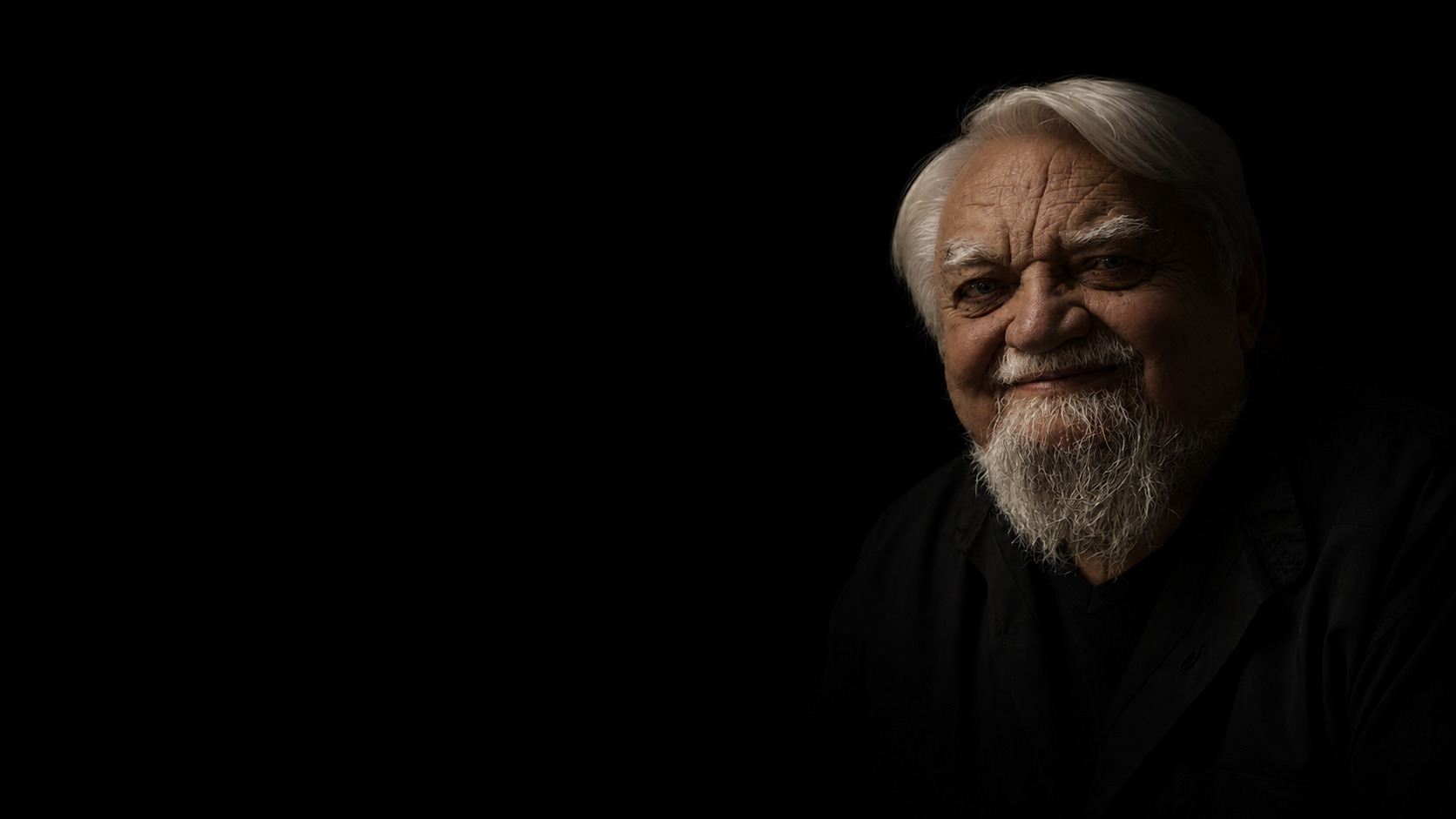
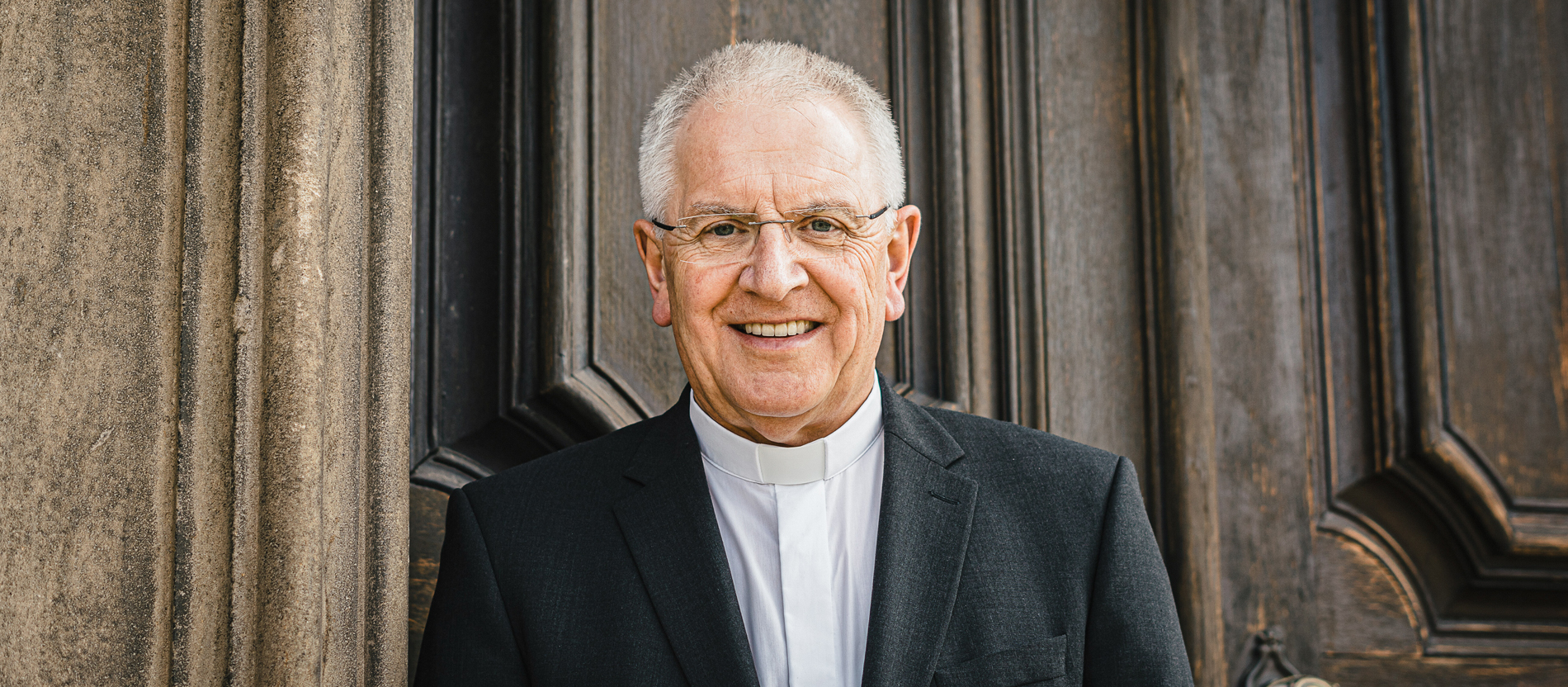
Another German bishop is stepping down from his diocese earlier than expected. This morning Pope Leo XIV accepted the resignation of Heinrich Timmerevers, who has been Bishop of Dresden-Meißen, in Saxony, since 2016.
Timmerevers turned 74 on 25 August. Under the Code of Canon Law, diocesan bishops are asked to submit their resignation on reaching the age of 75, which means his tenure would ordinarily have run until 25 August 2027. The diocese said his early departure reflected the bishop’s wish to hand responsibility over to ‘younger hands’.
A resignation just before his episcopal silver jubilee
The announcement comes just three days before a celebration the diocese had been preparing for some time. A Mass and ceremony are due to be held in Dresden Cathedral on Saturday 5 September to mark the 25th anniversary of Timmerevers’s episcopal ordination, which took place on 2 September 2001. Several hundred people are expected to attend. The homily will be preached by the president of the German Bishops’ Conference, Heiner Wilmer, and the new Apostolic Nuncio to Germany, Hubertus van Megen, is also expected to be present.
Van Megen had already been in Dresden on Monday 31 August for the annual reception of the Saxon Katholisches Büro, marking the 30th anniversary of the treaty between the Land and the Holy See. It was his first public engagement as nuncio. On that occasion Timmerevers praised the treaty as a reliable framework for cooperation ‘even when perspectives differ’.
The €48 million new diocesan curia
Some German weeklies have also linked the bishop’s resignation to the way the diocese’s finances were managed, claiming that Timmerevers had handled its accounts too freely and, in particular, had approved spending of ‘€40 or €50 million’ on what has been described as a new episcopal palace.
The picture is considerably more complicated than that account suggests. At the centre of the controversy is the Propst-Beier-Haus on Schweriner Straße, built to house the diocesan curia and its offices. Until 2025 they had been based in a 1978 building on Käthe-Kollwitz-Ufer which had no lift and suffered from a maintenance backlog that the diocese itself had described as enormous.
The foundation stone for the new complex was laid on 10 November 2022 by the bishop together with the Vicar General, Andreas Kutschke. Around 80 curial staff moved into the building between 22 September and 2 October 2025. The project cost around €48 million in total, €5 million more than the estimate drawn up in 2021. The complex covers roughly 6,400 square metres, with 40 per cent of the space let to third parties as offices or residential accommodation.
The diocese has always maintained that it considered three options: renovating the old premises, renting other buildings or constructing a new building outside the city centre. According to the diocesan authorities, the solution eventually chosen was the least expensive over the long term. The project was also financed from savings accumulated over the years, without taking on debt.
The shadow of Limburg and a shrinking diocese
Figures on that scale inevitably provoke a reaction in the German Church. As early as 2021, Kay Gräbert, head of the diocese’s property department, acknowledged how widespread was the suspicion summed up in the phrase: ‘Anyone who builds must have money.’ The precedent that still hangs over cases of this kind is Limburg, where the controversial episcopal residence, which cost around €31 million, contributed to the end of Franz-Peter Tebartz-van Elst’s tenure as bishop in 2014.
The comparison with Dresden, however, does not stand up particularly well to scrutiny. The building in question is the administrative headquarters of the diocese, not the bishop’s private residence. The cost has nevertheless weighed heavily in public discussion, particularly because Dresden-Meißen is a small diocese facing increasingly evident financial and pastoral difficulties. It has around 124,700 Catholics, equivalent to 3 per cent of the population of Saxony and eastern Thuringia, spread across 37 parishes. In his pastoral letter for Lent 2025, Timmerevers himself wrote that around 14,000 people had left the Church over the previous ten years — a tenth of the total. He also said that it was no longer possible to fill every vacant post and that financial transfers from dioceses in western Germany were declining. ‘I have repeatedly been told: the diocese is heading straight into a wall,’ he admitted.
The real pressure point: abuse
The issue that has really worn the bishop down, however, has been the handling of abuse. On 10 May 2023, the Interdiocesan Commission for the Investigation of Sexual Abuse (IKA) was established as a joint body for the Archdiocese of Berlin, the dioceses of Dresden-Meißen and Görlitz, and the Military Ordinariate. It had nine members appointed by the Länder governments, the dioceses and a victims’ council. The commission operated outside ecclesiastical structures and was not subject to instructions.
Its history was troubled almost from the start. Its first chair resigned after only two months. In September 2023, a working group was set up to examine cases in Dresden-Meißen, focusing in particular on Wechselburg, Leipzig South, Schirgiswalde, Annaberg and Dresden-Strehlen.
In June 2024 the commission then decided to commission a sociological study based on a ‘restorative justice’ model. The Archbishop of Berlin, Heiner Koch, publicly welcomed the initiative.
The bishops dissolve the commission
A year later, however, the commission no longer existed. On 3 June 2025, Koch, Timmerevers and the Bishop of Görlitz, Wolfgang Ipolt, together with the Military Bishop, Franz-Josef Overbeck, announced that it was being dissolved with retroactive effect from 31 May. They attributed the decision to the resignation of several members, ‘persistent communication problems’ and an operation that had come to be regarded as ‘dysfunctional’.
The commission was closed only weeks before the study was due to be awarded, after interested research teams had been required to submit their applications by mid-May. Never before in Germany had a commission of this kind been dissolved directly by the bishops.
Kerstin Claus, the Independent Commissioner for Child Sexual Abuse Issues at federal level, described the decision as a ‘clear breach of the agreement’ reached with the dioceses and said the ground had been pulled out from under the victims’ feet. The victims’ council, meanwhile, called for ‘a precise investigation into the causes’.
Dresden breaks with Berlin and Görlitz
From that point, Dresden decided to proceed on its own. On 9 January 2026, spokesman Michael Baudisch confirmed that the diocese would no longer take part in a joint commission with Berlin and Görlitz and would instead establish a body of its own.
The historian Bernd Schäfer was once again brought into the process, despite the fact that victim representatives on the previous commission had withdrawn their confidence in him and removed him. On 17 June 2026, exactly one year after the commission was dissolved, the diocese announced that Schäfer himself had been commissioned to conduct a study into cases recorded from 1945 to the present day.
The research will draw on diocesan, state and Stasi archives, with the findings expected in around a year. Seats on the new commission have been reserved for victims, but no victim has applied. The diocese has therefore renewed its appeal, acknowledging that without their perspective ‘a genuine investigation is not possible’.
It has not yet said when the new body will actually be in a position to begin its work. The diocese is aware of 67 cases dating from 1945 onwards.
Victims’ groups and the problem of establishing the facts
The problem, as often happens, is that these victims’ groups insist on operating through structures of their own and according to criteria they themselves determine.
The case of Cardinal Ouellet, however, showed how dangerous it can be to grant such organisations a kind of automatic presumption of truth simply because they manage to attract media attention. In some cases, that same exposure is used to target people regarded as enemies, while the rigorous establishment of the facts is pushed into the background.
It cannot simply be a matter of paying people in the hope of bringing cases to an end, as Christoph Schönborn did and required others to do in Austria. Allegations of abuse require serious procedures for establishing the facts. Even when victims’ groups raise the level of confrontation and generate considerable media attention, there must be a firm commitment to verifying the facts rigorously, without allowing an allegation automatically to become a conviction.
The Ouellet and Castiglia cases, both covered by Silere non possum, demonstrate precisely this: not everyone who presents themselves as a victim really is one. There are also people who attempt to exploit a tragedy as grave as abuse in order to obtain money, settle personal scores or exact revenge.
Denying this for fear of the media reaction does not protect genuine victims. On the contrary, it undermines the credibility of the entire process of establishing the facts and places those who have genuinely suffered abuse on the same level as those who try to exploit that abuse for their own interests.
From the Münsterland to Saxony
Timmerevers came to Dresden from a completely different world. Born on 25 August 1952 in Nikolausdorf, in the district of Cloppenburg, he was the second of six children in a farming family from the Oldenburg Münsterland, a Catholic enclave in a region with a strong Lutheran tradition. He has said that he grew up ‘Catholic as a matter of course’.
Ordained to the priesthood in Münster in 1980, he had spent 1977 and 1978 at the Focolare Movement’s international school in Frascati. He became parish priest of Visbek in 1989 and, from 2001 to 2016, served as Auxiliary Bishop of Münster and Offizial in Vechta, the office exercising episcopal jurisdiction over the part of the diocese lying in Lower Saxony.
When he learned in 2016 that the Dresden cathedral chapter had elected him bishop, he was, by his own admission, ‘rather shocked’. ‘It was clear to me: now you leave your home, your land and your homeland and move to another country.’
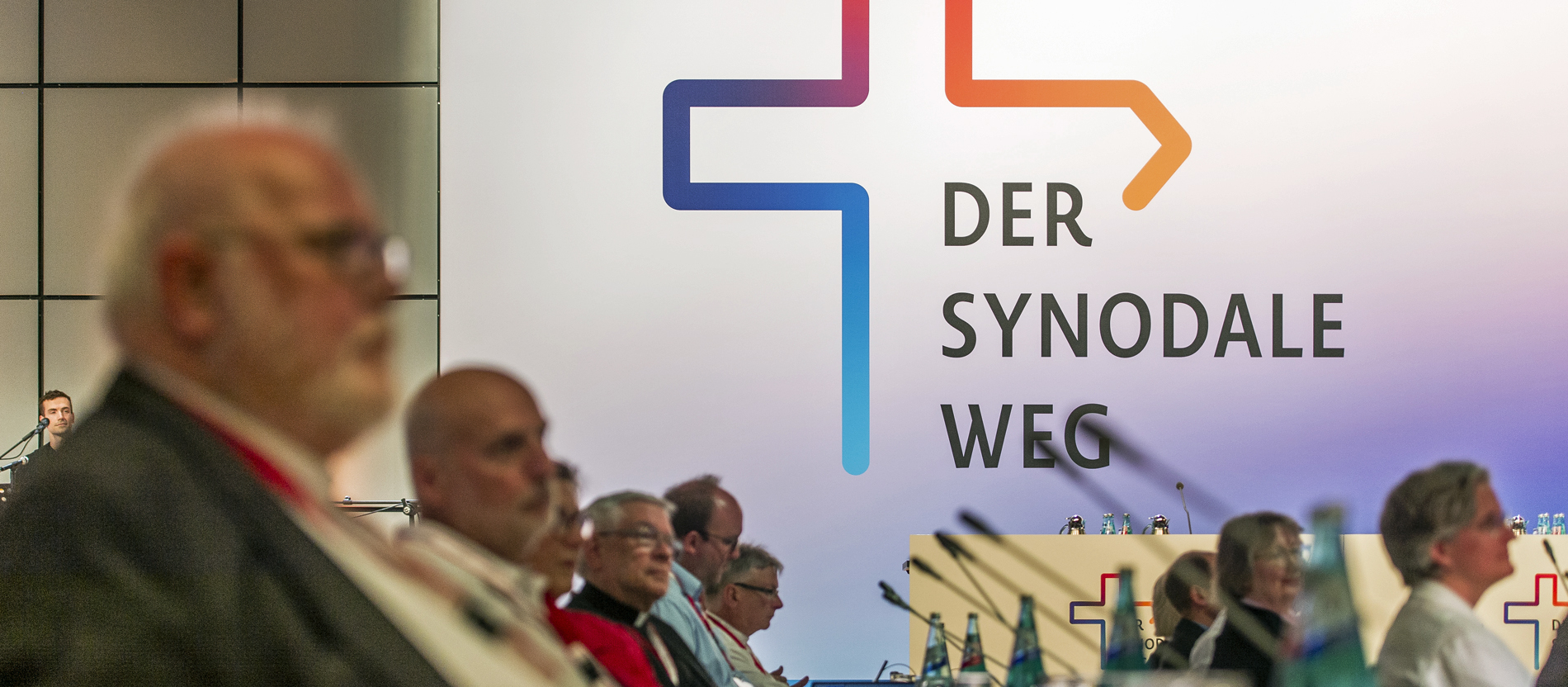
One of the bishops backing the Synodal Way
Within the German Bishops’ Conference, Timmerevers has been among the bishops most supportive of the reforms promoted through the Synodal Way. In September 2020 he said he supported the blessing of same-sex couples. In December 2019, speaking about the role of women in the Church, he said the issue ‘hurts three times over’.
Since 2023 he has chaired the bishops’ commission for education and schools. He has been a chaplain of the Order of Malta since 2011 and federal spiritual adviser to the Malteser Hilfsdienst since 2012. In 2026 the Order of Malta awarded him its highest honour reserved for clergy, the Pro Piis Meritis.
Leo XIV received him in audience on 11 February 2026 as part of the German bishops’ visits to the new Pope. On 9 November 2025, meanwhile, he represented the German Bishops’ Conference at the synod of the Evangelical Church in Germany, where he and the Evangelical Lutheran Church of Saxony announced plans for a joint academy.
A difficult diocese for the next bishop
At Timmerevers’s installation in 2016, Cardinal Reinhard Marx expressed the hope that he would discover ‘much that is precious’ in the faith of a diocese which the Communist regime had spent decades trying to suppress. Ten years later, the succession to Heinrich Timmerevers begins in a diocese that has lost a tenth of its faithful, has just opened a new diocesan curia costing €48 million and, above all, still does not have a fully functioning commission for investigating abuse. As in 2016, it will be for the cathedral chapter to elect his successor.