Tallinn - In a lengthy article this week on Russian hybrid operations in Europe, Der Spiegel includes a passage that may seem relatively minor in Germany but is rather less so in Estonia. The magazine interviewed Marek Kohv, an expert at the International Centre for Defence and Security in Tallinn, who previously worked in Estonian military intelligence and later as a government analyst. It asked him how much Russia’s physical presence in European countries still matters now that a substantial share of influence operations, recruitment and disinformation takes place online.
Kohv says it still matters. He cites the Russian House in Berlin, research organisations and universities, before adding: ‘The Russian Orthodox Church, for example, is one of Russia’s instruments.’ According to Kohv, various ostensibly civilian institutions continue to play a role in Russian activities abroad, even though Moscow has moved many of its operations into the digital sphere in recent years.
It is the assessment of one analyst, but in Estonia it largely coincides with the position that the Estonian Internal Security Service, generally known by its acronym KAPO, has been expressing publicly for several years. It also helps explain a dispute which, viewed from outside, can look like a rather arcane quarrel between the state and a Church. In Tallinn, the issue has become very concrete. Since 27 June 2026, an amendment to the Churches and Congregations Act has been in force prohibiting an Estonian religious organisation from being linked, through its statutes, other documents governing its activities or financial ties, to a religious centre, governing body or spiritual leader based abroad who poses a threat to national security, the constitutional order or public order. Among the factors the law considers relevant are support for military aggression and incitement to war or violence.
The organisations concerned have six months to comply. The deadline set by the Ministry of the Interior is 28 December 2026. Formally, the law applies to all religious denominations, but the reason it was drafted is well known and has never been concealed by the government: it concerns primarily the Eesti Kristlik Õigeusu Kirik, the Estonian Christian Orthodox Church, which until 31 March 2025 was called the Moskva Patriarhaadi Eesti Õigeusu Kirik, or Estonian Orthodox Church of the Moscow Patriarchate.
The change of name is one part of the story
There are in fact two major Orthodox structures in Estonia that are easily confused. The Eesti Apostlik-Õigeusu Kirik, the Estonian Apostolic Orthodox Church, is under the Ecumenical Patriarchate of Constantinople. The EKÕK, by contrast, belongs to the ecclesiastical structure headed by the Russian Orthodox Church and the Moscow Patriarchate. There is also the Pühtitsa Convent in Kuremäe, Ida-Viru County, which has stavropegial status and is therefore directly subordinate to the Patriarch of Moscow. The Ministry of the Interior lists 37 parishes belonging to the EKÕK and just under a hundred nuns at Pühtitsa.
For a long time, this situation was treated primarily as a complicated consequence of Estonia’s ecclesiastical history and the Soviet occupation. The war in Ukraine turned it into a political and security issue.
The Estonian state’s concern lies neither with the Russian liturgy nor with the language used by worshippers, nor with their adherence to Orthodoxy. The government has repeated this many times, partly because Russian propaganda portrays Tallinn’s measures as religious persecution. The issue is the administrative relationship with an ecclesiastical structure whose leadership has taken an explicit position on Russia’s war in Ukraine.
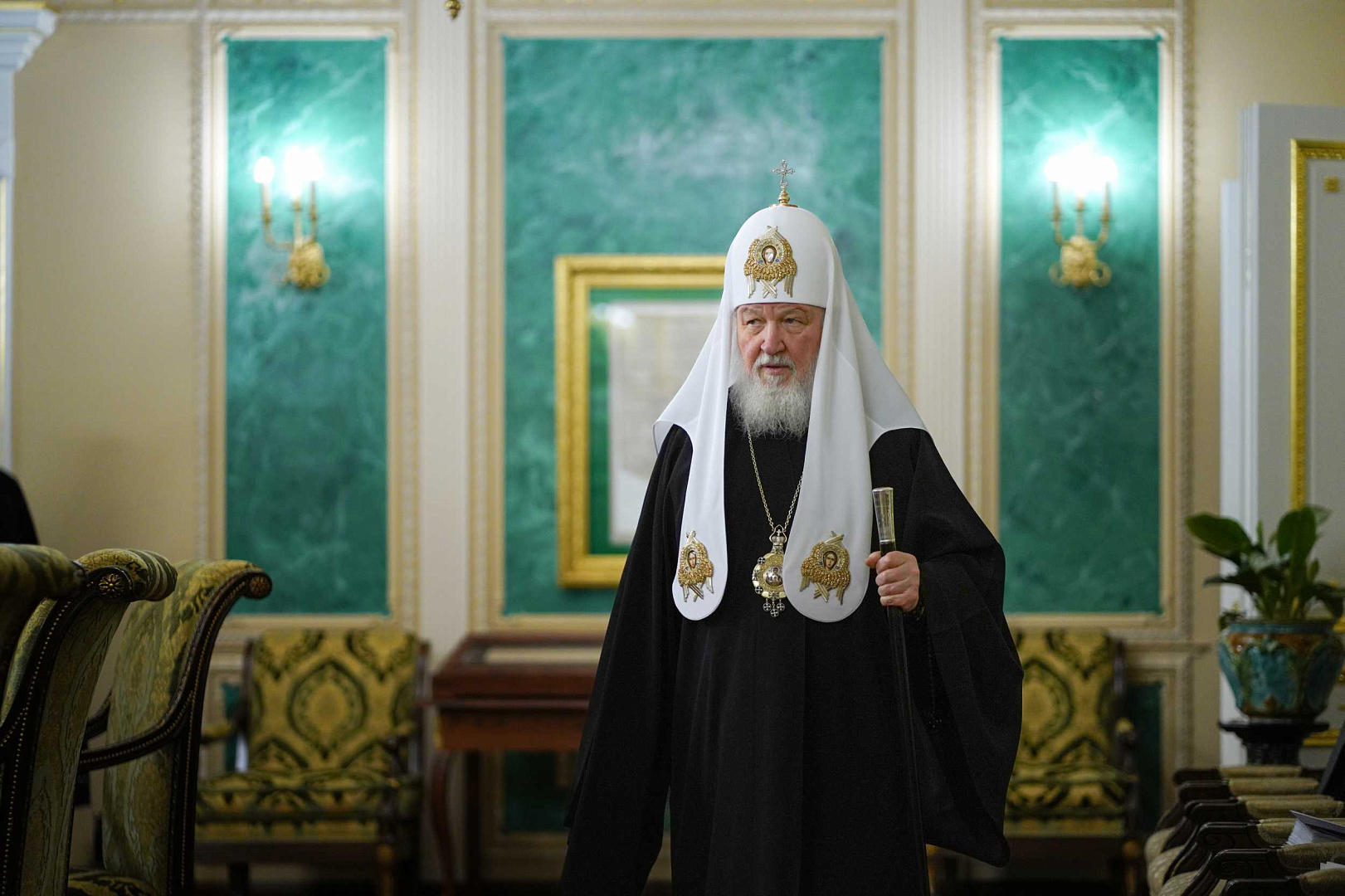
Patriarch Kirill, Vladimir Gundyayev, has supported Russia’s aggression from the outset. He has also recently published a book bringing together all his sermons on the just war. In March 2024, the World Russian People’s Council, an organisation chaired by Kirill himself and established under the auspices of the Russian Orthodox Church, approved a document describing the war in Ukraine as a ‘holy war’. The text also set out a conception of the so-called Russkiy mir, the ‘Russian world’, which assigns Russia a historical and cultural sphere extending far beyond the borders of the Russian Federation.
On 6 May 2024, the Riigikogu responded by approving, with 75 votes in favour and eight against, a statement declaring the Moscow Patriarchate an institution sponsoring the military aggression of the Russian Federation. Parliament deliberately specified that the declaration concerned the Patriarchate ‘as an institution and a directing body’, rather than Orthodox believers, and called on religious communities in Estonia to assess the risks arising from Moscow’s influence activities and to sever their ties with the Patriarchate.
Since then, the central point of disagreement between the state and the Church has remained essentially the same: how independent is the Estonian Church really from Moscow?
The EKÕK maintains that it poses no threat to the state and has gradually amended its statutes. In August 2024, it removed several explicit references to the Moscow Patriarchate from the text, and the following March it changed its name. The reference to the Patriarchate thus disappeared from the Church’s name as well.
For the Ministry of the Interior and KAPO, however, the substance has not changed enough. The new statutes still refer to the Tomos of 26 April 1993, by which Patriarch Alexy II regulated the position of the Estonian Church within the Moscow Patriarchate. According to the account published by the ministry, that document continues to give Moscow powers that are not merely spiritual: certain decisions taken by the Church require confirmation by the Patriarch, while within the Russian Orthodox Church’s canonical order the Estonian structure remains classified as a ‘self-governing’ Church.
There is also the problem of its leader
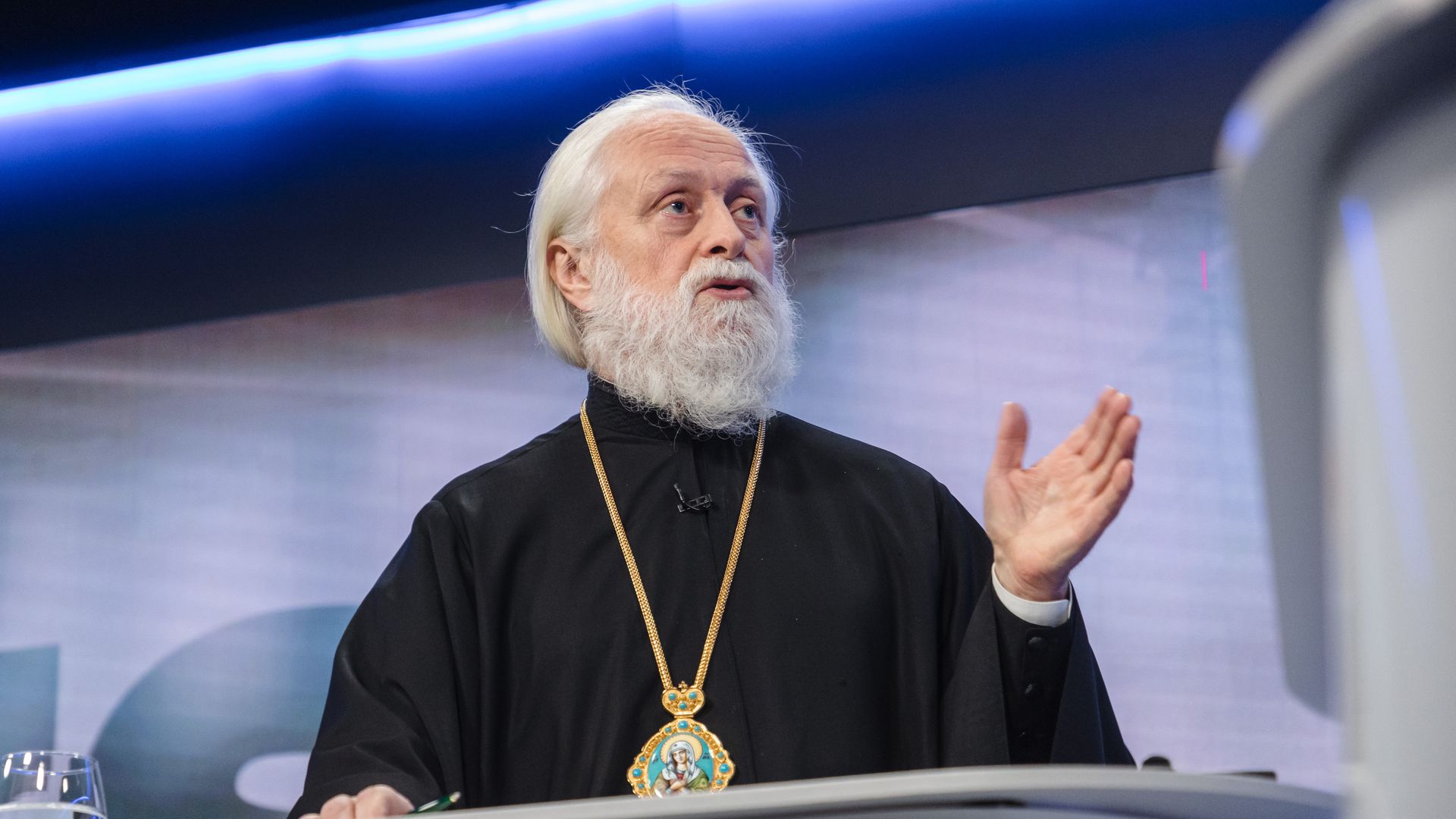
Since 2018, the Church has been led by Metropolitan Eugene, born Valery Reshetnikov, a Russian citizen who spent more than twenty years as rector of the Moscow Theological Academy. The biography published on the EKÕK’s own website notes that his election in Tallinn in 2018 was confirmed by the Holy Synod of the Russian Orthodox Church and subsequently by Patriarch Kirill.
In January 2024, the Estonian authorities decided not to renew his residence permit. The police said the decision was based on his activities and public statements and that, according to KAPO, the metropolitan’s conduct had contributed to the implementation of Russian security policy in Estonia. The measure concerned Reshetnikov personally, and the authorities stressed that it was not directed against the Church or its faithful. The metropolitan rejected the accusations, described the decision as political and left Estonia on 6 February 2024.
Before leaving, however, he said something that would weigh heavily on the debate over the following two years: he would continue to oversee the Church from a distance. And that is what happened. In its 2025–2026 Annual Review, KAPO maintains that the EKÕK continues to be directed by the Russian Orthodox Church and that the amendments to its statutes and its change of name have primarily created the appearance of independence. Even today, the EKÕK’s official website identifies Eugene as ‘Metropolitan of Tallinn and All Estonia’ and head of the Church. On 31 August, as the deadline imposed by the new law approached, the Church also announced a series of prayer services ‘for our Church’ in Tallinn parishes, again ‘with the blessing of Metropolitan Eugene’.
The new law makes this arrangement difficult to maintain. One of its provisions prevents anyone who, within the previous ten years, has had a residence permit refused or revoked because they were considered a possible threat to national security from serving on the management board of a religious organisation. The Ministry of the Interior has already told the Church that appointing a new metropolitan is therefore among the changes it is required to make.
KAPO’s position on the relationship between the Russian Orthodox Church and the Russian state is not based solely on Kirill’s statements. In its annual reviews, the Estonian security service has published a series of much more specific cases in recent years.
In its 2024–2025 Annual Review, for example, KAPO said that representatives of what was then the MPEÕK had held covert talks with Russian structures over funding for a Russian-language private school in Tallinn linked to the Church, the St John of Shanghai and San Francisco School. The service also described educational activities in which Russian and Western values were contrasted and considerable emphasis was placed on patriotic education based on models originating in Russia.
The 2025–2026 Annual Review contains even more specific allegations. KAPO writes that in 2025 the EKÕK had employment relationships with several nuns from the Exaltation of the Cross Jerusalem Stavropegial Convent near Moscow. According to the Estonian service, the convent is involved in providing material support to Russian forces: collecting fuel and camouflage nets, assisting wounded soldiers and making deliveries to occupied territories. KAPO also maintains that one of the nuns present in Estonia, Elvira Koroleva, had received a medal in 2024 from the All-Russia People’s Front, an organisation linked to the presidential administration, bearing the words ‘Everything for Victory’.
These are assessments and information attributed to the Estonian security service, rather than established criminal responsibility on the part of the Church as a whole. And it is precisely this distinction on which the EKÕK bases its defence.
Following the Supreme Court ruling of 8 June, the Church argued that the central issue remained unresolved: whether it is legitimate to go as far as the compulsory dissolution of a religious community because of its canonical ties to another Church even when its actual activities in Estonia have not created a threat to national security. The EKÕK said that its activities and adherence to ‘Christian ideals’ posed no danger to the state and announced that it was also considering an application to the European Court of Human Rights.
It was a distinction that had also concerned the President of the Republic, Alar Karis.
The law passed by the Riigikogu in fact went through an unusual legislative process. Karis refused to promulgate it for the first time on 24 April 2025, arguing that the text disproportionately restricted freedom of religion and freedom of association. At the same time, he said something that was often lost in the subsequent controversy: in his view, the Moscow Patriarchate ‘undermines the sovereignty and democracy of states’. His disagreement therefore concerned the legal means chosen to counter it, rather than his assessment of Moscow’s conduct.
Parliament amended the law, but Karis rejected it again in July. He believed the text still allowed the state to intervene in doctrinal and religious relationships and that this intruded too deeply into the autonomy of religious denominations. The Riigikogu passed the legislation again on 17 September 2025, with 63 votes in favour and 15 against, leaving the president with two options: promulgate it or refer it to the Supreme Court. Karis chose the latter.
On 8 June 2026, the Supreme Court en banc dismissed the president’s application. Seventeen justices took part in the decision and six dissented. According to the majority, the law can be interpreted in a manner compatible with the Constitution and does not automatically lead to the arbitrary compulsory dissolution of a religious association.
The legislation was published and entered into force on 27 June. The six-month period began from that date. The government maintains that the way the issue is presented is itself part of the problem. Interior Minister Igor Taro has insisted that no church or monastery will be closed by administrative decision: if a community failed to comply and the ministry considered it necessary to seek its dissolution, that decision could be taken only by a court. He has also rejected the claim, widely used by Moscow, that Estonia is banning Russian Orthodoxy.
This is not merely a rhetorical precaution. In April 2025, Russian Foreign Ministry spokeswoman Maria Zakharova accused Estonia of deliberately destroying human rights and described the law as an attack on religious freedom. It is exactly the kind of message the Estonian authorities had expected.
This is why Marek Kohv’s remark to Der Spiegel needs to be understood as part of a much broader debate. When he describes the Russian Orthodox Church as an ‘instrument’ of Moscow, he is not suggesting that a worshipper entering Tallinn’s Alexander Nevsky Cathedral is taking part in a Kremlin operation. The issue raised by the Estonian authorities concerns the Church’s hierarchical structure, the clergy’s dependence on their superiors, the way bishops are appointed, financial and institutional ties, and the authority the Patriarchate retains over the bodies within its jurisdiction.
It is also why Tallinn has sought to separate the question of the Russian Orthodox tradition from that of the Moscow Patriarchate. The Ministry of the Interior points out that Estonia also has parishes in the Russian tradition belonging to the Orthodox Church under the Ecumenical Patriarchate of Constantinople and maintains that ending administrative dependence on Kirill does not require believers to change their liturgy, language or spiritual tradition.
For the EKÕK, however, this distinction is itself problematic, because within Orthodox ecclesiology canonical ties cannot easily be reduced to an administrative relationship of the kind that exists between two civil organisations. Pühtitsa has made this clear: the nuns maintain that being forced to end their subordination to the Patriarchate would amount to severing a canonical bond with their Mother Church.
The government’s response is that the canon law of a religious denomination cannot require the Estonian state to accept on its territory institutional dependence on a foreign organisation that Parliament has declared to be a supporter of military aggression. In a country bordering Russia, with a substantial Russian-speaking population and extensive experience of Moscow’s influence operations, the question is not simply what a parish preaches on Sundays. It concerns who appoints its leaders, who can remove them, which documents it is required to observe, where its money and instructions come from, and what authority a foreign institution retains over organisations operating legally in Estonia.
As things stand, the issue remains unresolved. The EKÕK continues to present Eugene as its metropolitan, even though he lives in Russia and his residence permit was refused on security grounds. The Church’s website does not yet show that a successor has been elected. The ministry has set 28 December as the deadline for bringing its statutes, leadership and activities into line with the new law.
What happens by that date will above all show whether it is possible to separate a large Estonian Orthodox community from Moscow’s administrative structure without turning the dispute into a confrontation with its faithful. It is on precisely this distinction that the Estonian state has built its entire position: the Moscow Patriarchate is regarded as a security issue; Russian Orthodoxy as practised in Estonia is not.
R.S.
Silere non possum