On the evening of 12 June 2026, at 5.21pm Washington time, Anthropic - the company behind the Claude model - received a directive from the US Department of Commerce. Citing national security grounds, the order required the company to suspend access to its two most advanced artificial intelligence systems, Fable 5 and Mythos 5, for any foreign national, whether inside or outside the United States. In practice, the effect went further than the order itself. To ensure compliance, the company had to disable the two models for all its customers worldwide. According to observers, it was the first time a major laboratory had taken a publicly deployed model offline following government intervention.
The stated reason concerned an alleged method for bypassing the system’s safeguards in the cyber domain. The company replied that it was a minor and already known vulnerability, also present in competing models. Beyond the technical merits of the case, however, the episode exposed a fundamental question: two of the most capable models ever made public had been distributed by a private actor to hundreds of millions of people, and at a certain point a government decided that they had to be “switched off”. Who, in the end, commands a power of this kind?
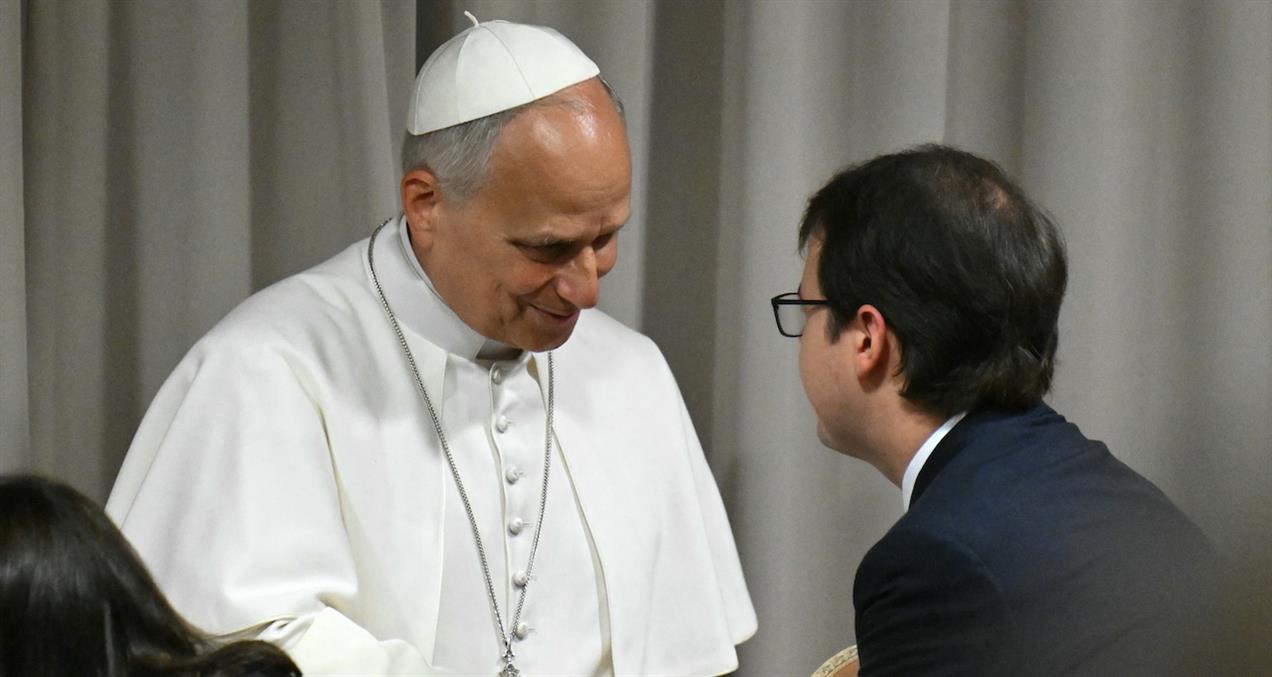
This is precisely the question around which Leo XIV’s second encyclical, Magnifica Humanitas, signed on 15 May 2026 - less than a month ago - revolves.
“Resources greater than those of many governments”
The encyclical begins with a political observation, even before it becomes a moral one. “In the past, it was mainly States that guided and directed innovation,” the Pope writes. “Today, however, the principal drivers of development are private, often transnational, actors endowed with resources and capacities for intervention greater than those of many governments” (n. 5). Technological power therefore takes on “an unprecedented, predominantly ‘private’ face”, making it even harder to discern, govern and direct towards the common good.
The Anthropic case captures this asymmetry, and also its reversal. On one side stands a company placing on the global market a capability that no state controlled. On the other stands a government responding with the only instrument of sovereignty left to it - export control - in an attempt to recover control. Leo XIV had described precisely this moving frontier: in the digital world, he writes, control “over platforms, infrastructure, data and computing power does not belong to States”, and when such power “is concentrated in a few hands, it tends to become opaque and to escape public oversight” (n. 95).
The sentence that now sounds prophetic
There is a passage in the encyclical which, after what has happened, is impossible to read without recognising how far ahead the Pontiff had seen. Speaking of the need to “disarm” artificial intelligence, the Pope writes that to disarm it means removing it from the logic of armed competition, which today is no longer only military, but also economic and cognitive. It is the race for the most powerful algorithm and the largest database, in order to consolidate a geopolitical or commercial advantage over all others (n. 110). He then adds: “To disarm means breaking this equivalence between technical power and the right to govern.”
That is exactly what is at stake in the American case. A model judged so powerful in the cyber field that it became a matter of national security; a race in which technical capability immediately becomes geopolitical leverage; a state and a company disputing the right to decide who may access it. This is the “equivalence between technical power and the right to govern” of which the Pope speaks.
The dual nature: defence and offence
Nor is it surprising that this battle began in the cyber domain. The encyclical devotes specific pages to the ambivalent nature of these technologies: “what is created for defence can quickly be converted to offence, and the boundary between protection and aggression tends to blur” (n. 183). Again, cyberspace “has become a field of confrontation”, where “cyberattacks, data manipulation and influence campaigns orchestrated with the help of AI can destabilise entire countries even before open armed conflict is reached” (n. 225).
The model at the centre of the case - in its less protected version - had been conceived precisely for cyber-defence and reserved for selected partners. The speed with which a “defensive” capability can become a security problem for a state is a clear demonstration of the ambivalence that Leo XIV had warned against in good time.
“A more moral AI is not enough, if decided by a few”
Here, perhaps, lies the most uncomfortable insight of the encyclical, and the one the Anthropic case brings most clearly into focus. The Pope does not stop at asking for more “ethical” models, or models more closely “aligned” with human values. “A more moral AI is not enough, if this morality is decided by a few,” he writes. “What is needed is a more present politics, capable of slowing down where everything accelerates and of protecting the spaces in which communities can still participate and question” (n. 107).
The episode shows both sides of the problem. On one side, a private company had decided on its own - according to its own safety criteria - which capabilities to make accessible and within what limits. On the other, there was a blunt public intervention, imposed from above and opaque in its reasoning. Magnifica Humanitas offers no easy shortcut for choosing sides. It asks, rather, that power, wherever it is exercised, should be “understandable, contestable and subject to oversight” (n. 164), and that those who design, train, authorise and use these systems should remain “identifiable and verifiable” (nn. 105, 199). This is the principle of accountability, and the American episode fails to meet it on several fronts at once.
The “new monopolies” and power over truth
The encyclical goes deeper beneath the surface of the news, and it is here that the Church’s social doctrine reveals its full relevance today. For Leo XIV, data, algorithms, infrastructure and computing power fall within the universal destination of goods. When they “remain concentrated in the hands of a few” - as n. 67 warns - they generate “a new imbalance” that contradicts the common good. The same principle that the Church once applied to land and capital the Pope now extends to data and computation, drawing from it a call of unusual candour: “to expose this new epistemic, economic and political asymmetry, naming the new monopolies of AI” (n. 109).
There is also a further level, which the dispute over access to models leaves in the shadows, while the Pope places it at the centre: power over what we consider to be true. Whoever possesses “powerful technical and economic resources”, he writes, can persuade multitudes about “what is the truth about the human being, the world, the meaning of existence, the family, even God”. He calls it by name: “pure power devoid of truth” (n. 133). The clash between a government and a company over who may “switch on or switch off” a model is, in the end, only the visible tip of this deeper dominion.
What remains is the framework that gives the encyclical its title: Babel and Jerusalem. The tower is “the work conceived without reference to God”, which “sacrifices the dignity of persons to efficiency” (n. 7); the city of Nehemiah is shared responsibility, rebuilt “stone by stone”. Between the two, the Pope is clear: “the building of Babel or that of Jerusalem begins in each one of us” (n. 130).
The strength of Magnifica Humanitas lies precisely here. Four weeks ago, before a government and a laboratory found themselves disputing the right to govern an algorithm, Leo XIV had already posed the right question: not whether technology should be used well, but who holds it and for what purpose. 12 June confirmed, if confirmation were needed, that the question was anything but abstract. And that, for now, neither of the contenders has an answer equal to it.