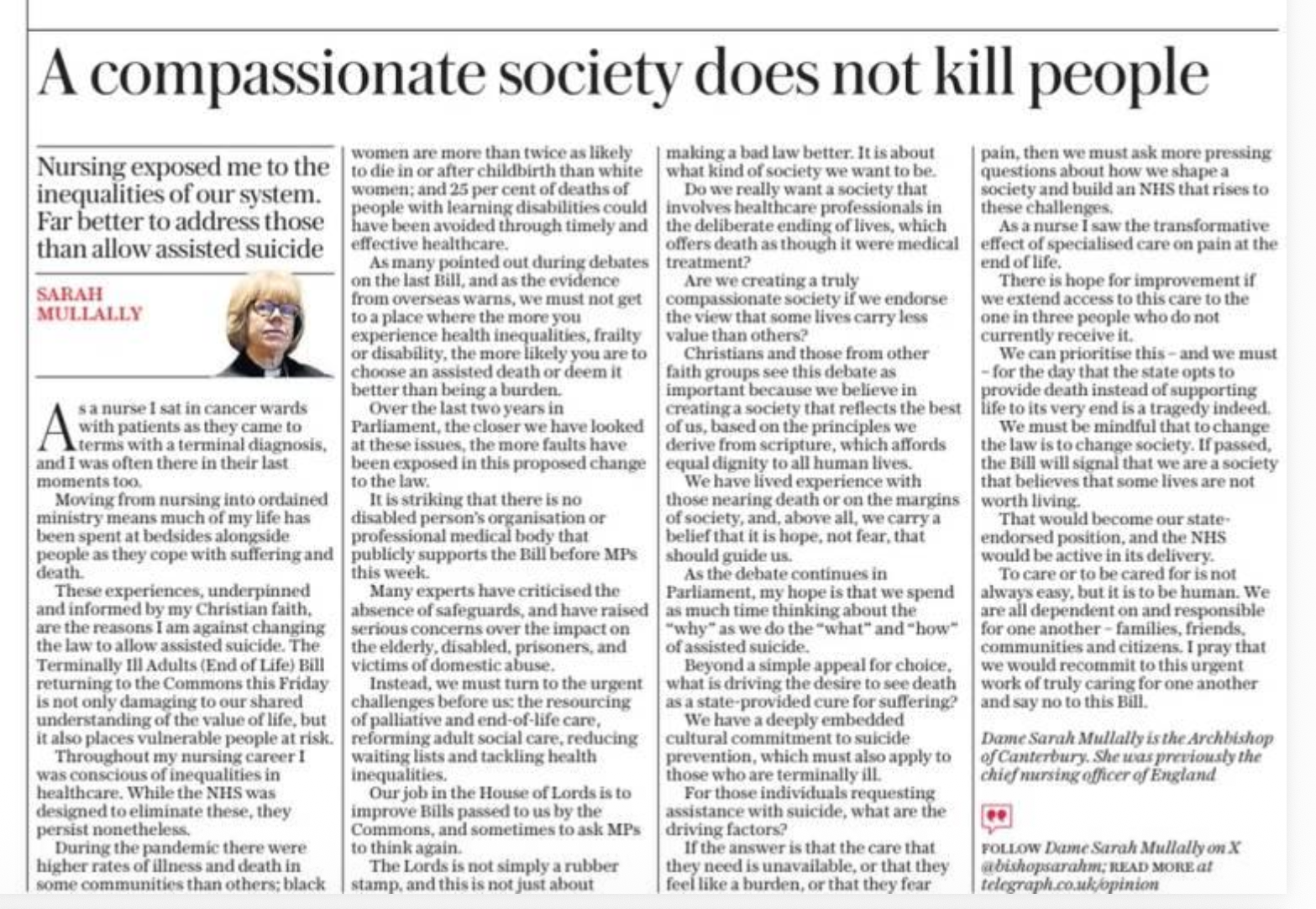

London - “A compassionate society does not kill people.” That is the headline chosen by the Daily Telegraph today for an article by Sarah Mullally, the Archbishop of Canterbury and former Chief Nursing Officer for England, arguing against the legalisation of assisted suicide.
Mullally writes as the Terminally Ill Adults (End of Life) Bill returns to the House of Commons. She begins with her own experience as a nurse on cancer wards and caring for patients in the final stages of their lives. Those years, she writes, also underpin her opposition to changing the law: deep inequalities already persist within Britain’s healthcare system and, in the Archbishop’s view, introducing assisted suicide would put the most vulnerable people at particular risk.
Mullally points to figures she knows well from her previous career in public health: black women in the UK are more than twice as likely to die during or after childbirth as white women, while 25 per cent of deaths among people with learning disabilities could have been avoided through timely and effective healthcare. It is within a system that still produces such disparities, she argues, that people would be able to seek assistance to end their lives. The Archbishop also stresses that no disabled people’s organisation or professional medical body has publicly backed the Bill. She also refers to concerns raised during its passage through Parliament about the safeguards for elderly and disabled people, prisoners and victims of domestic abuse.
The central point of her argument, however, concerns the reasons that may lead someone who is ill to ask to die. If such a request is driven by care being unavailable, by fear of becoming a burden on others or by fear of pain, Mullally writes, the first response should be better care: palliative care, social care, shorter waiting lists and action to reduce health inequalities. She notes that around one in three people who need palliative care in the UK are currently unable to receive it.
For Mullally, then, the issue goes beyond the provisions of the Bill. The question for MPs is what kind of healthcare system and society the UK wants to build: an assisted suicide law, she argues, would also change the role of the NHS, making it an active participant in the provision of assisted suicide.