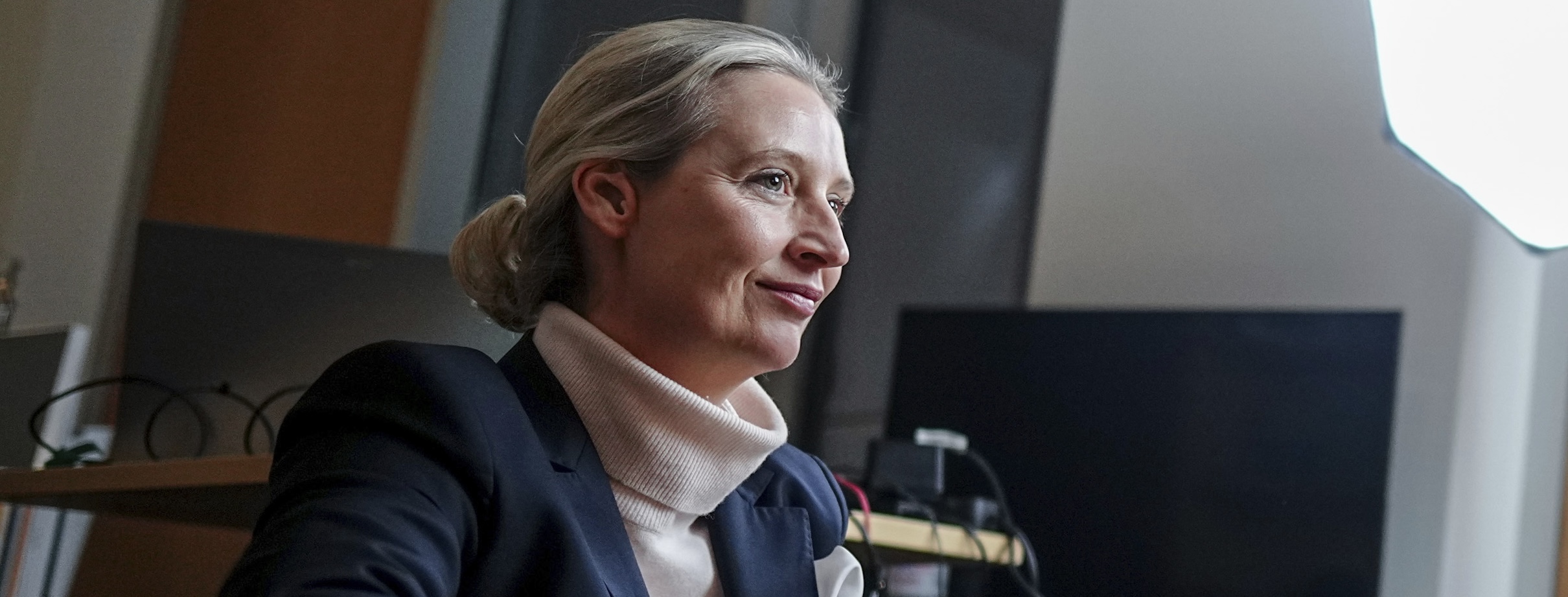
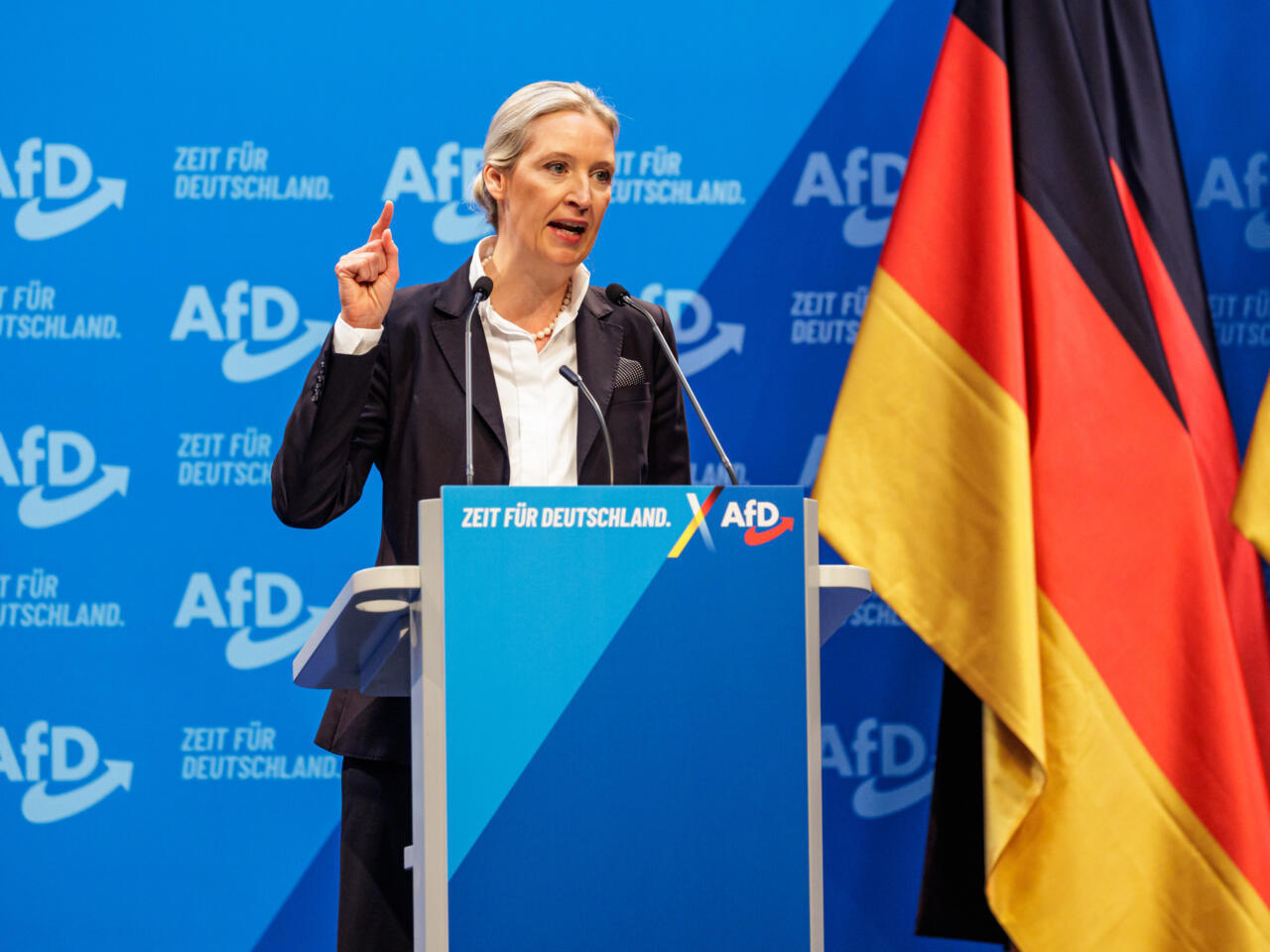
Rome - Yesterday, the AfD won the state election in Saxony-Anhalt with 43.8 per cent of the vote, according to ZDF figures, more than double its 20.8 per cent share in 2021. The CDU of outgoing Minister-President Sven Schulze fell to 17.2 per cent; the SPD, Greens and Die Linke all remained below ten per cent. The AfD’s lead candidate, Ulrich Siegmund, said that evening that the party would not jettison its positions for the sake of forming coalitions. Federal co-leader Alice Weidel, speaking to ZDF by video link, called it a “historic result” and “a very clear mandate to govern”. Among the positions Siegmund has promised not to abandon is one that directly concerns the woman who was defending them from the television studio.
What the AfD says
The manifesto on which the party’s Saxony-Anhalt branch campaigned states that “an intact family, consisting of mother, father and children, is demonstrably the best basis for a child’s healthy and positive development”, and complains that “sexual deviations” (sexuelle Abweichungen) are now promoted more insistently “than the normal family consisting of a man and a woman”. The pocket manifesto distributed during the election campaign accuses the “old parties” of pursuing “a policy against the normal family” and promises to “hold up families with children as a model way of life”. Five years earlier, in its written responses to the Wahlprüfsteine submitted by the Lesbian and Gay Federation ahead of the 2021 state election, the same state branch had described the rainbow family as “in truth, often nothing more than the result of a failed attempt to create a normal family” and had called for same-sex couples to be stripped of the right to adopt, reserving it for “normal married couples”.
The Grundsatzprogramm, adopted in Stuttgart on 30 April and 1 May 2016 and still the party’s foundational programme, states in section 6.1 that “within the family, mother and father care for their children with shared and enduring responsibility”. The manifesto for the 2021 Bundestag election reduces the definition to two lines: “The AfD is committed to the family as the nucleus of our society. It consists of father, mother and children.” The manifesto for the 2024 European elections adds: “Other forms of cohabitation besides marriage between a man and a woman are to be respected, but not placed on an equal footing”, and asserts “the unique and privileged position of father and mother”in bringing up children. The federal manifesto approved in Riesa in January 2025 shifts the language towards trans issues, denouncing the “Trans-Gender-Hype” and “premature sexualisation”, and states in the chapter on separation that “every child needs a father and a mother throughout childhood”.
The word Homosexualität appears in none of these texts. Exclusion operates through definition: once it has been established what a family is, everything else is relegated to the category of tolerated arrangements. Away from the manifestos, the language becomes less restrained. In May 2018 Björn Höcke, presenting his parliamentary group’s document on Leitkultur in Erfurt, said that homosexuality should at most be “put up with” (ertragen) and that same-sex marriage “torpedoes” heterosexual families. On 17 May 2019, the international day against homophobia, Beatrix von Storch told the Bundestag that the Greens inhabit a “decadent parallel world of urban elites”; a month later she rejected “special privileges for a small clientele”. Martin Reichardt, the parliamentary group’s spokesman on family affairs, wrote in 2022 that “disgusting people” (Widerlinge) were roaming kindergartens teaching children about “sexual diversity”, and in June 2024 he signed the motion opposing the government’s “Queer leben” plan, which in his view “destroys families”. In January 2025 parliamentary group leader Stephan Brandner announced that the group would resubmit its proposal to abolish Ehe für alle, same-sex marriage, which has been legal in Germany since 2017, because it is contrary to the Basic Law. On 26 March 2026 the group called for rainbow flags no longer to be flown at German embassies and for the international day against homophobia to be abolished. MP Nicole Höchst has for years repeated the party formula: nothing against homosexuality, provided it is consensual and between adults. Word for word, that is the boundary drawn by Section 175 of the Criminal Code after its reform in 1969.
The fact of the matter
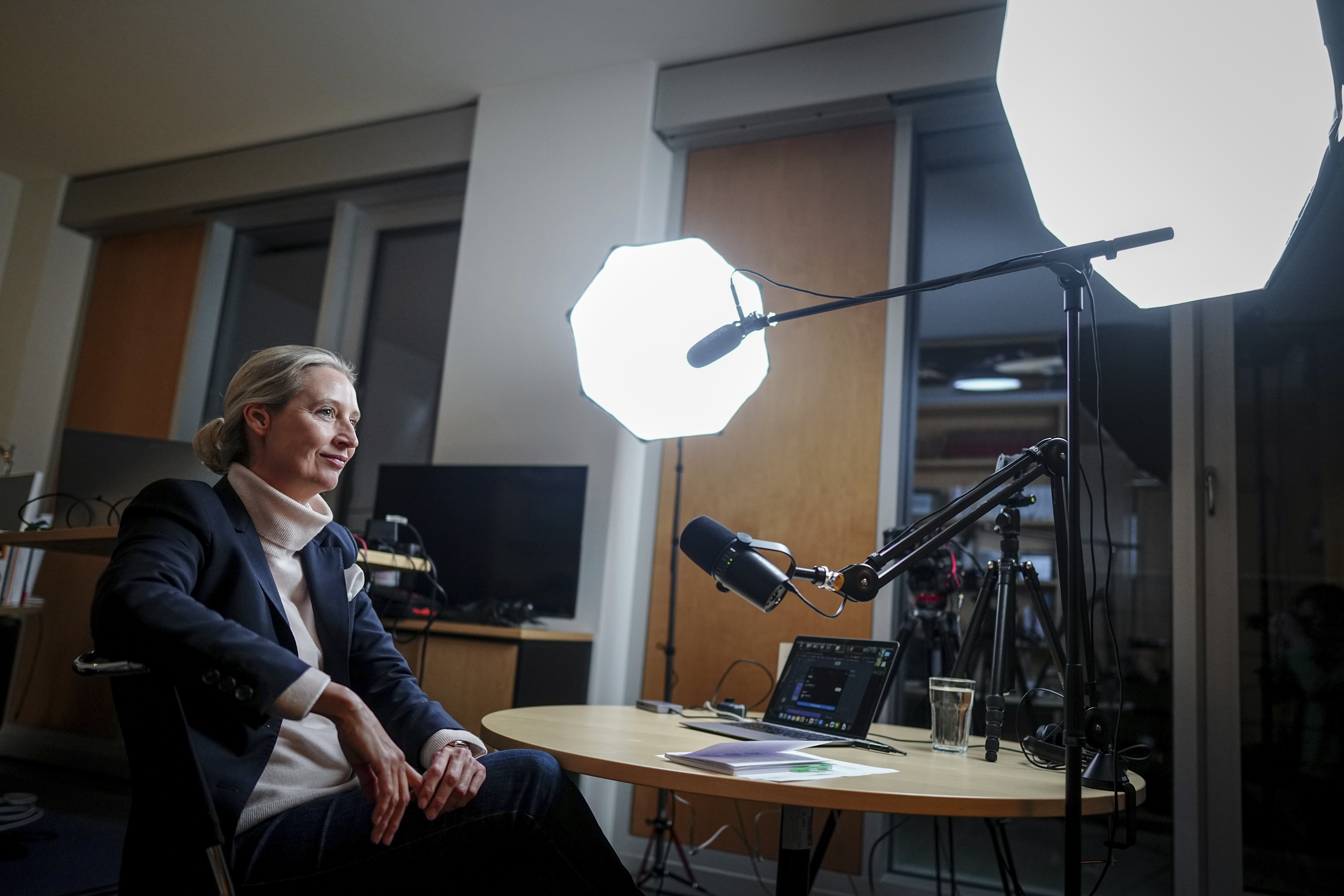
Alice Weidel has been a member of the AfD since 2013, has led its parliamentary group since 2017 and the party since 2022. She lives in German-speaking Switzerland with Sarah Bossard, a film producer born in Sri Lanka in 1982 and adopted by a Swiss couple, and with the two children they are raising together. On ARD’s Wahlarena on 17 February 2025 she explained that she lives in an eingetragene Lebenspartnerschaft, a registered partnership, and argued that such partnerships should be given the same status as marriage “without changing the institution of marriage”: that same evening, the Lesbian and Gay Federation pointed out that this is the formula her party uses when calling for Ehe für alleto be abolished. Bossard, for her part, told the Basler Zeitung that she had voted yes in Switzerland’s referendum on same-sex marriage on 26 September 2021. Asked by RTL on 5 July 2026 about the passage in the Saxony-Anhalt manifesto, Weidel replied: “They can put whatever they like in there. My own life is different”, adding that she saw no contradiction between presenting the traditional family as a “model for society” and her own life.
What Weidel thinks about herself is a matter for her. The fact that remains on the table is another: a woman in a civil partnership with another woman, and the mother of two children, has for four years led a party whose manifestos refuse to recognise her household as a family, whose proposed legislation seeks to abolish the institution that her partner voted for in Switzerland, and which, in a state it has just won, has described her condition as a “deviation”. Inconsistency is the mildest word available.
What psychology says
The question posed in the title of this article has more than eighty years of scientific literature behind it. The first to describe the mechanism was Kurt Lewin in 1941, in an essay entitled “Self-Hatred Among Jews”: a member of a stigmatised minority may adopt the gaze of the dominant group and turn it against people like themselves, receiving in return a place, however precarious, among those passing judgement. Gordon Allport returned to the observation in 1954 in The Nature of Prejudice, in the chapter on traits produced by victimisation. From a psychoanalytic perspective, Anna Freud had already catalogued reaction formation in 1936, whereby an unacceptable impulse is transformed into its opposite and displayed with zeal. The Authoritarian Personality, by Adorno, Frenkel-Brunswik, Levinson and Sanford (1950), linked rigidity about sexual roles, obsession with other people’s deviance and adherence to authoritarian movements: it is the bridge between the clinical and the political.
The term homophobia was coined by George Weinberg in 1972 and defined, among other things, as fear of oneself. Later, Ilan Meyer, in a 2003 article in Psychological Bulletin, formalised the concept of minority stress, of which internalised homophobia is one component. In 2012 Netta Weinstein, Richard Ryan and several other researchers published in the Journal of Personality and Social Psychology a series of experiments in which participants showing a greater discrepancy between implicit orientation and stated orientation also recorded the highest levels of hostility towards homosexuals and were more likely to come from authoritarian and homophobic families. An earlier study by Adams, Wright and Lohr, published in the Journal of Abnormal Psychology in 1996, had found genital arousal in response to homosexual material among men with high homophobia scores. Finally, Leon Festinger’s theory of cognitive dissonance, developed in 1957, provides the key to understanding the claim that there is “no contradiction”: when two cognitions are mutually incompatible, the mind compartmentalises them rather than giving one of them up.
The most useful framework, however, remains Erving Goffman’s. In Stigma (1963), he distinguishes between passing, completely concealing a discrediting characteristic, and covering, the behaviour of someone who does not deny the characteristic but plays it down, makes it less conspicuous and sometimes actively works to ensure that nobody regards it as relevant. Covering does not require a lie. It requires an audience willing to pretend not to see, and a continuous performance by the person seeking acceptance from a group that despises what he is.
What literature says
Literature offers several examples of how this mechanism is described: through the image of the mirror. When Proust, in the opening pages of Sodom and Gomorrah, speaks of an “accursed race” condemned to lying and to living under suspicion, he is already saying that the invert’s first enemy is another invert, because he is the only person capable of recognising him. Baron de Charlus, who mocks and exposes those like himself with a ferocity he reserves for no one else, is doing nothing more than defending himself from the image they reflect back at him; and the whole novel shows how much that defence costs him, in loneliness and ridicule. Thomas Mann, in 1912, had described the opposite cost, that of successfully maintained silence: Gustav von Aschenbach has spent decades building a flawless respectability, and it is precisely the perfection of the edifice that makes its collapse before a boy on the Lido so devastating. But the case closest to what is happening in Germany today was written by E. M. Forster, and he did not want it published: Maurice, written in 1913–14 and published posthumously in 1971, offers in Clive Durham the portrait of the renegade who becomes a guardian. Clive loves Maurice at Cambridge, then decides that this part of himself no longer exists, marries, prepares for a career in Parliament and ends up zealously upholding the very order that had terrified him. He does not do it out of conviction. He does it because conviction is the only place where fear cannot reach him.
The next step, from private respectability to a career within the system that persecutes, is taken by Klaus Mann in Mephisto (1936): Hendrik Höfgen, the actor who becomes director of the Reich’s theatres, conceals a relationship with a black woman and performs for the regime that would send her to a camp; the secret and the career sustain one another, because every public success becomes an insurance policy on the secret. Alan Hollinghurst transported the same structure to the England of Section 28 in The Line of Beauty (2004): Nick Guest sits at the table of a Thatcherite MP, laughs at jokes about homosexuals, and his place in that house depends precisely on the quality of that laughter. Anyone reading reports from AfD party conferences today will recognise the same pattern. James Baldwin, in Giovanni’s Room (1956), finally showed where the reckoning leads: David, unable to look at himself, pays the price by making Giovanni pay it too, and the novel is an account of how little it takes to destroy a homosexual without being genuinely homophobic; it is enough to be unable to bear being one.
There is, however, another path, and it can be found in Italian literature itself. Pasolini was expelled from the Communist Party in October 1949, after the Ramuscello affair, on grounds of political and moral unworthiness; trials followed, dozens of them, throughout his life. He could have chosen concealment, which the party might perhaps have allowed him in exchange for silence; instead, he chose to write everything under his own name and never to use his own condition as a weapon against someone else. Giovanni Testori, Catholic and homosexual until his death in 1993, lived the conflict between faith and desire as an open wound and put it on stage, in In exitu (1988) and elsewhere, without ever turning it into a crusade. Neither found self-acceptance easy, and neither asked others to pay the price of his own struggle. This is the distance separating honest dissent from covering: one can believe that homosexuality is a disorder, say so and stop there; or one can make it one’s only subject, the daily target, the proof of belonging to a group one fears losing. The books are there to remind us that the second path, from Charlus onwards, has never saved anyone.
And the Catholic Church?
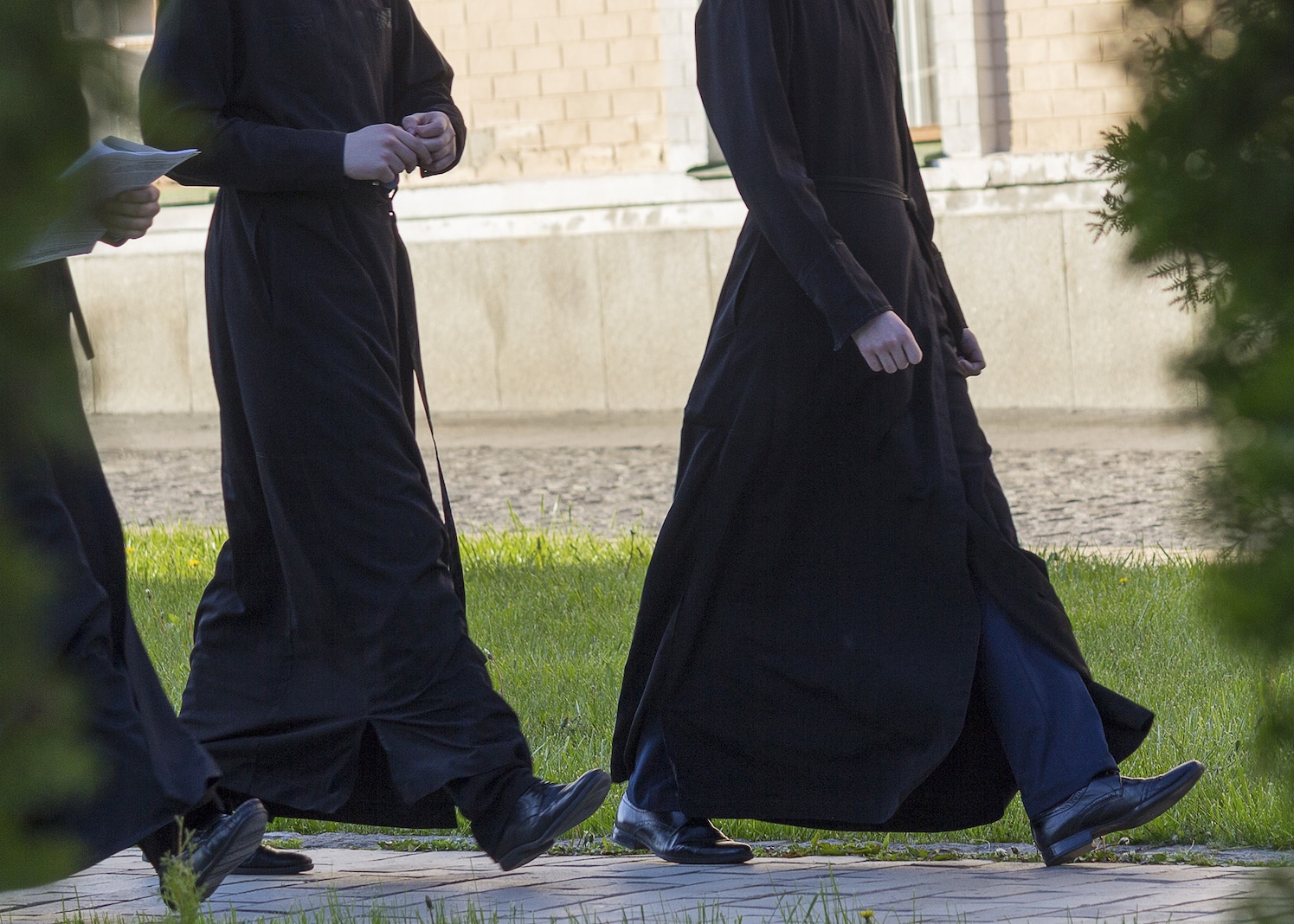
Anyone familiar with ecclesiastical circles knows this sad pattern well. Catholic doctrine on homosexuality is well known. A Catholic, a priest or a bishop may say that they accept that doctrine, and leave it there. It is a position: it can be debated, accepted or rejected.
The embarrassing phenomenon is of a different kind, and appears with almost liturgical regularity in the vicinity of those same political parties, to which these people show a loyalty they do not accord the Roman Pontiff. Within the Church and the wider ecclesiastical world around it, there is a cohort of men and women for whom homosexuality, and sexuality more generally, constitutes the only subject available. Every week they publish articles and post reels on the subject; they denounce lobbies, deplore the existence of homosexual clergy and of “omosessualisti” laypeople, a word that appears in no dictionary and designates nothing; they demand purges; and they discuss sex with a persistence that no other area of Catholic moral teaching manages to elicit from them. They address poverty, the liturgy, catechesis and the sacraments only to arrive, within a few lines, at the same destination. Frédéric Martel built an entire book around this observation, In the Closet of the Vatican (2019), arguing that the homophobic fervour a prelate displays in public increases in proportion to what he keeps private, and supporting the thesis with numerous examples. Those who inhabit that world recognise the description without needing confirmation: it is often the case that the priest quickest to accuse his fellow priests of homosexuality is the very same one who has for years been living with a young man who has no pastoral duties whatsoever.
Goffman gave the behaviour a name. Covering, in its most determined form, consists in proving to the group one wishes to deceive that one belongs fully within it. Relentless aggression towards homosexuals thus becomes the price of admission: the closer the trait lies, the louder the performance must be. Someone who sincerely adheres to the doctrine has no need to repeat it every day or wield it against others; the doctrine is written down, and one need only refer to the Catechism. Anyone who makes it their only subject is in fact talking about something else, and usually everyone understands that except him.
Around forty MPs will enter the Landtag in Magdeburg on a manifesto that defines their party leader’s family as a “deviation”. None of them, as far as is known, has yet stopped before the mirror that Proust placed in front of Charlus. They probably will not: covering, as Goffman teaches us, works for as long as everyone in the room agrees to look elsewhere.
Fr.S.B. and L.I.
Silere non possum