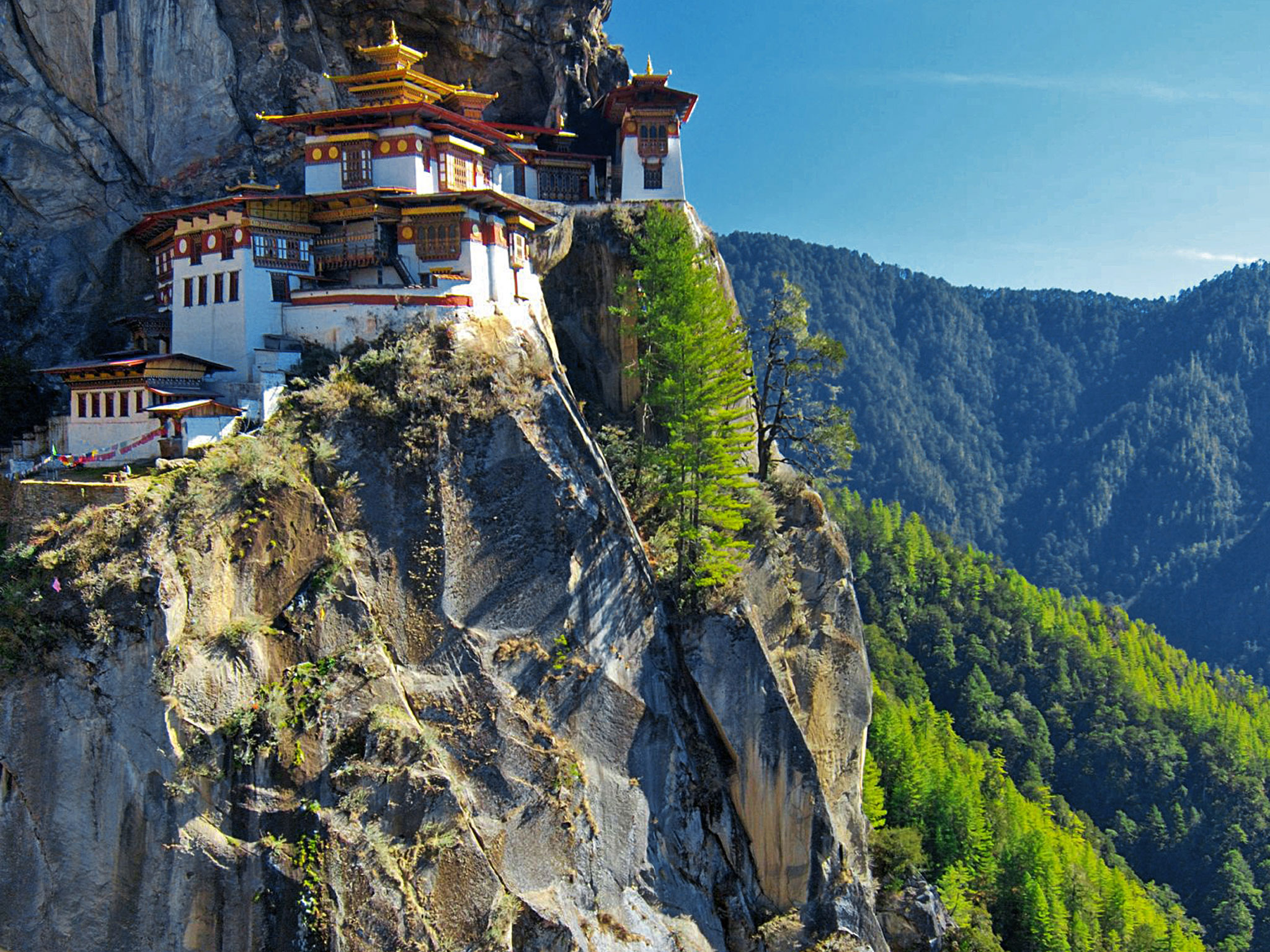
Bhutan is a landlocked Himalayan kingdom squeezed between two giants. India lies along its southern, eastern and western borders; China is to the north. Its capital is Thimphu and the country’s projected population for 2025 was 784,043, according to Bhutan’s National Statistics Bureau.
Its formal name is the Kingdom of Bhutan. The head of state is King Jigme Khesar Namgyel Wangchuck, the fifth monarch of the Wangchuck dynasty. The country is governed as a democratic constitutional monarchy, with Tshering Tobgay serving as Prime Minister for the 2024–28 term. Parliament consists of the King and two chambers: the 47-member National Assembly and the 25-member National Council.
Those facts make Bhutan relatively easy to describe. Its position on the diplomatic map is much more unusual.
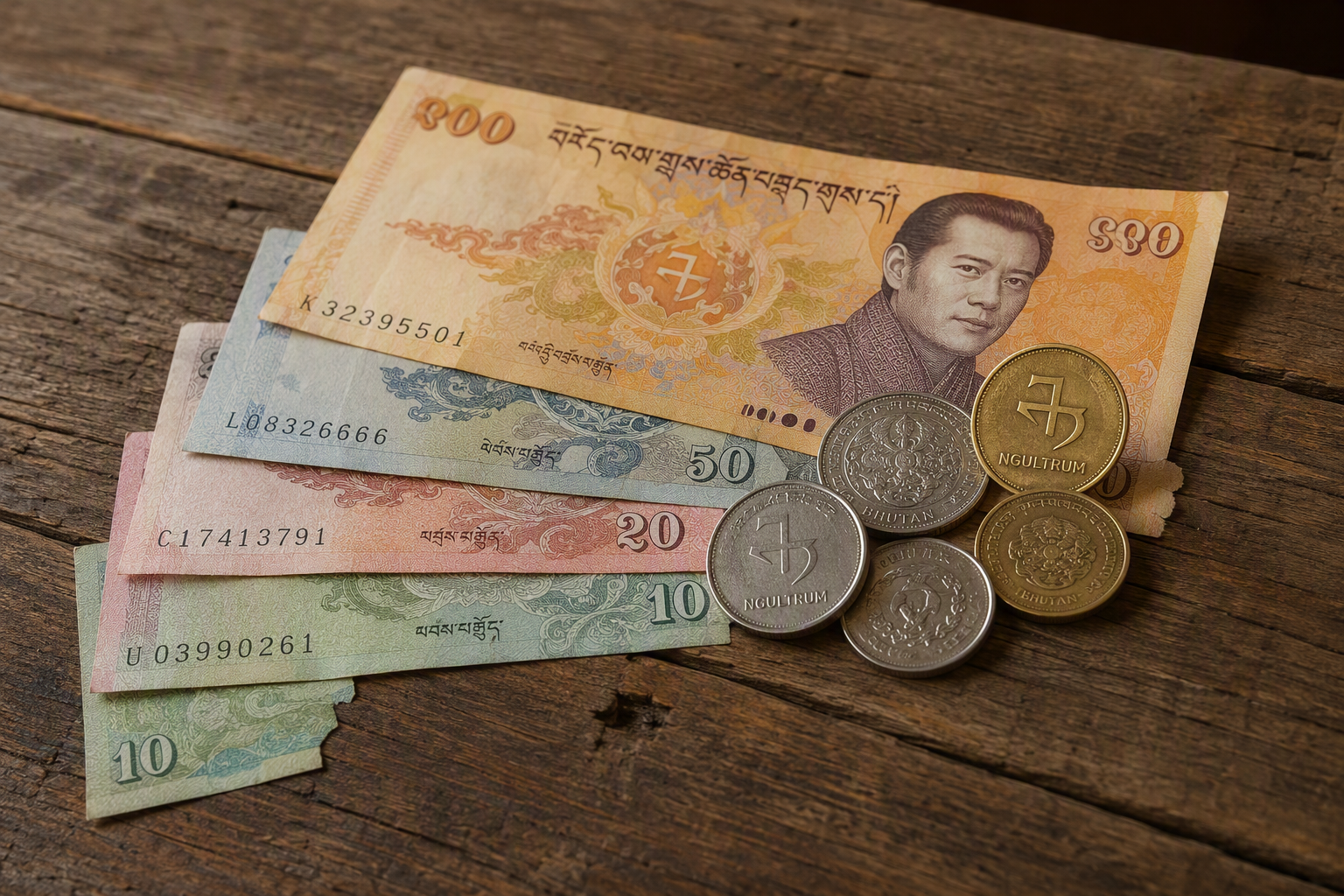
Bhutan has diplomatic relations with only 62 countries
On 3 August 2026, Bhutan established diplomatic relations with Jordan. The following day, its Ministry of Foreign Affairs and External Trade announced that Jordan had brought the total to 62 countries, plus the European Union.
There are 193 member states of the United Nations. Bhutan itself joined the UN on 21 September 1971. More than half a century later, therefore, it still maintains formal diplomatic relations with fewer than a third of the organisation’s members.
The United Kingdom is not one of the 62.
Nor are the United States, China, France or Russia. In other words, Bhutan does not have formal diplomatic relations with any of the five permanent members of the UN Security Council. Bhutan’s own published record of bilateral relations includes countries ranging from India and Japan to Germany, Australia, Canada, Israel, Spain and, more recently, Qatar, Liechtenstein, Monaco, Brunei and Jordan. Britain remains outside that roster. That does not mean Britain and Bhutan have no dealings with one another. Far from it.
The UK government says that the British High Commissioner to India oversees Britain’s bilateral ties with the people of Bhutan. There is no British embassy or consulate in Bhutan; the nearest British consular office is the Deputy High Commission in Kolkata. This distinction matters. Countries can communicate, trade, cooperate, exchange visits and maintain political contacts without having established full diplomatic relations in the formal sense. And in Britain’s case, relations with Bhutan go back much further than the modern diplomatic system might suggest.
Britain and Bhutan have been dealing with each other for more than 150 years
For British readers, the absence of formal diplomatic relations has an additional historical peculiarity. Bhutan’s official foreign-policy history records clashes between Bhutanese forces and the expanding British presence in Cooch Bihar and Assam. Those tensions culminated in the Duar War and the Treaty of Sinchula in 1865, which established peace between the British government and Bhutan.
Bhutan then entered what its own government describes as a period of “self-imposed isolation”. Relations with the British continued, although Bhutanese rulers resisted a permanent British presence inside the country. Communications were conducted through Bhutan’s representative in Kalimpong, in what is now the Indian state of West Bengal.
Another agreement followed in 1910: the Treaty of Punakha. Bhutan’s Ministry of Foreign Affairs says that treaty reinforced the kingdom’s sovereignty and became the basis of its foreign policy until Britain left India in 1947.
After Indian independence, Bhutan’s diplomatic centre of gravity shifted decisively towards New Delhi. The India-Bhutan Friendship Treaty was signed in 1949, and India became the first country with which Bhutan established modern diplomatic relations, in 1968.
So the story is slightly counter-intuitive: Britain and Bhutan fought, signed treaties and maintained links long before Bhutan had diplomatic relations with most of the world, yet the modern United Kingdom still does not appear on Bhutan’s list of formal diplomatic partners.
The connections have nevertheless persisted. The then Prince of Wales visited Bhutan in 1998, the Duke of York in 2010, and the Duke and Duchess of Cambridge travelled there in April 2016 at the invitation of King Jigme Khesar Namgyel Wangchuck. Bhutan’s foreign ministry described that visit as strengthening ties between the two royal families and the peoples of the two kingdoms.
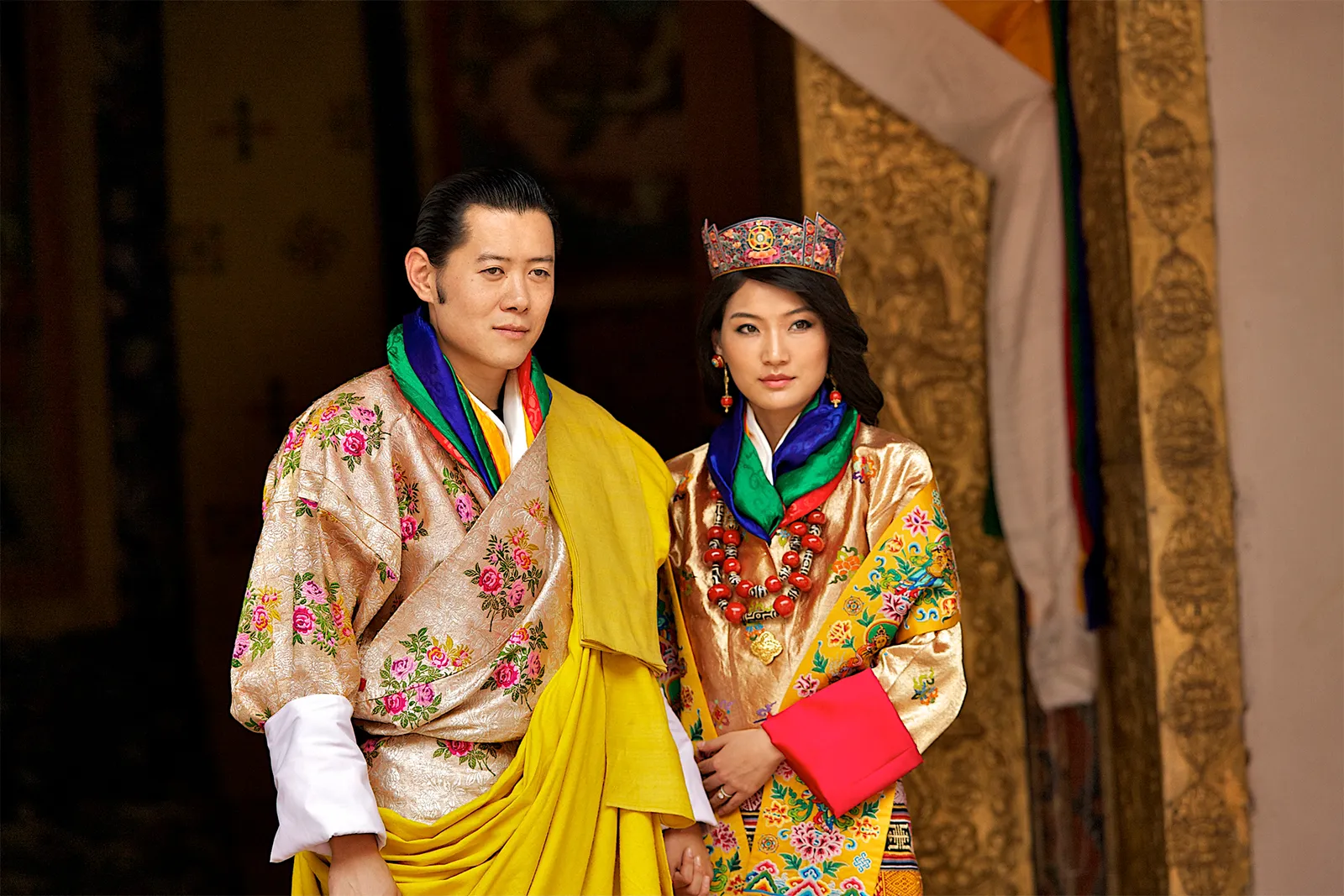
Why does Bhutan have so few diplomatic relationships?
The answer lies partly in the way Bhutan entered the modern international system.
For much of its history, the kingdom kept foreign involvement tightly controlled. Its government now openly describes that period as one of “self-imposed isolation”. During the twentieth century, Bhutan gradually moved away from that approach as its rulers sought economic development while protecting the country’s independence and political room for manoeuvre.
The process was deliberately slow.
Bhutan started its first Five Year Plan in 1961. India became its first formal diplomatic partner in 1968. Bhutan joined the United Nations in 1971 and established diplomatic relations with Bangladesh in 1973. Kuwait and Nepal followed in the 1980s, along with several European and Asian countries.
The government’s own foreign-policy document explains that the expansion of diplomatic relations remains “deliberate and purposeful”, taking account of the kingdom’s limited resources, requirements and national interests. It also says Bhutan seeks engagement with countries regardless of whether formal diplomatic relations exist.
That distinction helps explain what otherwise looks like an eccentric diplomatic arrangement.
Bhutan is not trying to pretend that Britain, America or China do not exist. It simply has not considered a conventional diplomatic relationship with every major power necessary.
Recent years have brought a steady expansion. Bhutan established formal ties with Liechtenstein and Monaco in June 2026, Brunei in July and Jordan in August. The total has therefore continued to rise, one country at a time.
The China question is even stranger
The most striking omission is arguably China. Bhutan and China share a border. They have also been negotiating over that border for decades. Yet they still have no formal diplomatic relations. Boundary negotiations began in 1984. In October 2021 the two governments signed a memorandum setting out a Three-Step Roadmap intended to accelerate negotiations over their frontier. Two years later, the 25th round of boundary talks was held in Beijing.
The process is still active.
From 30 March to 1 April 2026, Bhutanese and Chinese officials met in Beijing for the 15th Expert Group Meeting on boundary issues. Their technical teams discussed delimitation and demarcation, including sections of the border where there is no dispute. So Thimphu can negotiate directly with Beijing about the exact line separating their two territories while stopping short of establishing formal diplomatic relations with the People’s Republic of China.
Bhutan’s foreign-policy documents also say that it maintains friendly and cooperative relations with China and adheres to the One China policy. For a country whose foreign relations are sometimes described simply as isolationist, this is a useful correction. Bhutan is selective rather than diplomatically absent.
India is the relationship that matters most
Bhutan’s links with India sit in a different category.
India was its first diplomatic partner and remains at the centre of Bhutanese foreign policy. Bhutan’s own government describes the relationship as rooted in geography, politics, economics, religion, culture and history. Hydropower has been one of the main areas of economic cooperation. Geography makes India difficult to bypass. Bhutan has no coastline, and its principal routes towards the wider world run southwards through Indian territory.
India also occupies an unusual place in Bhutan’s external representation. The British government, for example, manages its Bhutan-related work from the British High Commission in New Delhi. British nationals needing consular assistance in Bhutan are directed towards Kolkata. The diplomatic geography of Bhutan therefore often has another country sitting between Thimphu and the outside world.
Is Bhutan really the “country of happiness”?
For many people in Britain, Bhutan is better known for one expression than for its foreign policy: Gross National Happiness, or GNH. The concept was developed under the fourth king, Jigme Singye Wangchuck, in the early 1970s. Bhutanese institutions describe it as a philosophy of development intended to measure national progress more broadly than economic output alone. Its four established pillars concern sustainable and equitable socio-economic development, environmental conservation, cultural preservation and good governance.
The phrase has created a persistent misunderstanding abroad. Bhutan has not simply discarded GDP and replaced it with a national happiness score. Its National Statistics Bureau publishes GDP growth, GDP per capita, inflation, employment and other conventional economic indicators just as statistical authorities elsewhere do. Gross National Happiness functions instead as part of the country’s approach to public policy and development.
The environmental provisions associated with that philosophy are unusually concrete. Bhutan’s Constitution requires at least 60 per cent of the country to remain under forest cover for all time. That is a rather different proposition from the popular shorthand that everybody in Bhutan is somehow happier than everybody elsewhere.
How does Bhutan's government work?
Bhutan’s modern political system is comparatively young. The Wangchuck monarchy dates from 1907, while the country’s democratic constitutional arrangements were established in 2008. Parliament consists of the Druk Gyalpo - the King - alongside the National Council and National Assembly.
The National Assembly has 47 elected members. The National Council has 25: twenty are elected, one from each of Bhutan’s twenty districts, while five are appointed by the King. The current prime minister, Tshering Tobgay of the People’s Democratic Party, returned to office in 2024 after previously serving as prime minister from 2013 to 2018. The monarch remains much more prominent in Bhutanese public life than the sovereign in Britain. King Jigme Khesar Namgyel Wangchuck is formally part of Parliament as well as head of state, and the monarchy occupies a central place in Bhutan’s political institutions and national identity.
Can British citizens travel to Bhutan?
Yes. The absence of formal diplomatic relations between the two countries does not prevent British citizens from visiting Bhutan.
The UK Foreign, Commonwealth & Development Office says holders of a full British citizen passport must obtain a visa in advance. The visa may be arranged through a Bhutanese tour operator, a hotel or directly through Bhutan’s immigration authorities. The current one-off application fee is US$40.
Adult visitors must also pay Bhutan’s Sustainable Development Fee, currently US$100 per night. A British passport must remain valid for at least six months after the planned date of departure from Bhutan.
There is another small diplomatic curiosity here. The FCDO advises British travellers who need clarification about Bhutanese entry rules to contact the Bhutanese Embassy in Brussels. Britain has no embassy in Thimphu, and Bhutan has no formal diplomatic relationship with the UK, yet practical contact between the two countries continues through other capitals and institutions.
Why Bhutan’s foreign policy looks so unusual
Bhutan became a UN member in 1971, takes part in international organisations, receives foreign visitors, negotiates directly with China, works closely with India and maintains contacts with Britain and the United States. At the same time, its government has chosen to keep the formal diplomatic network comparatively narrow.
That approach follows a logic visible in Bhutan’s own foreign-policy documents. Sovereignty has occupied an unusually prominent place in the kingdom’s external affairs, shaped by its position between India and China and by the experience of dealing with larger powers from the nineteenth century onwards. Its officials describe diplomatic expansion as gradual and tied to the country’s actual capacity and interests.
As of August 2026, the result is a country of fewer than 800,000 people with formal relations with 62 states and the European Union - but none with the United Kingdom, the United States or China.
For Britain in particular, that produces one of the stranger details in the story of Bhutan: the two kingdoms have fought a war, signed treaties, exchanged royal visits and maintained links stretching back more than a century and a half, while never becoming conventional diplomatic partners in the modern sense.