Getting from Sydney to Munich involves travelling more than 16,000 kilometres. On the medal produced for the 2026 TCS Sydney Marathon, however, the distance between the two cities is only a few centimetres.
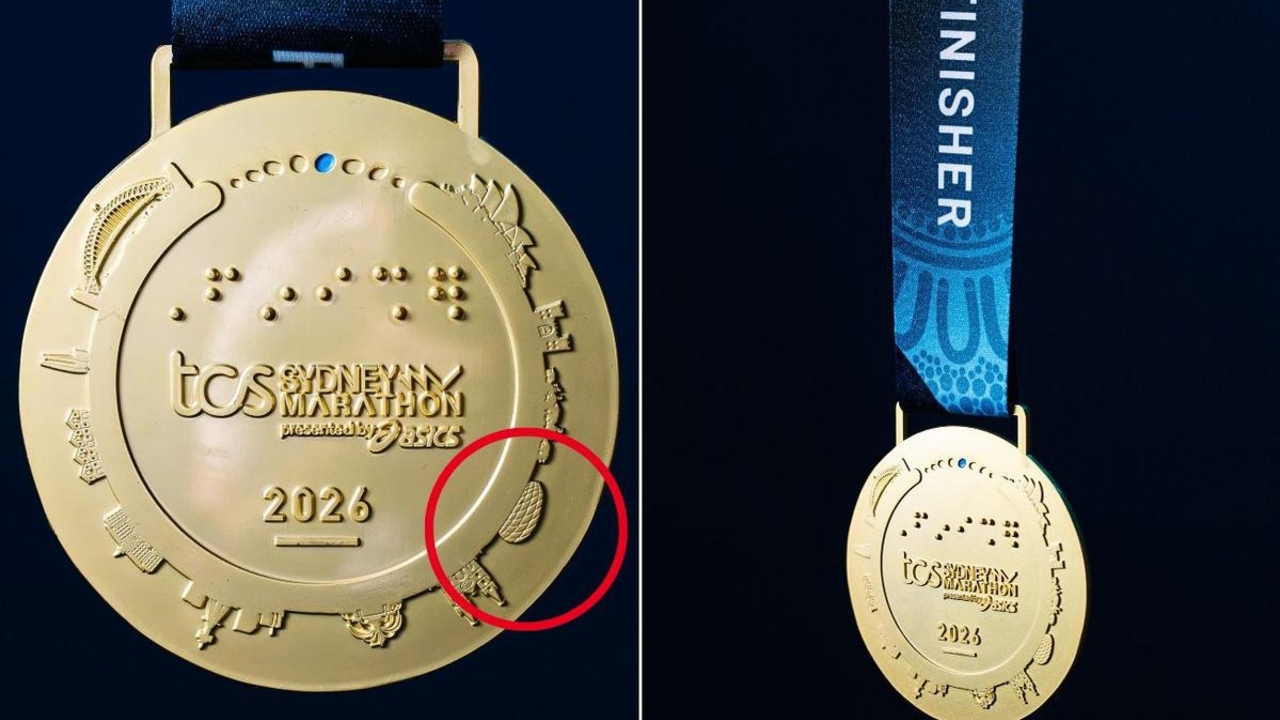
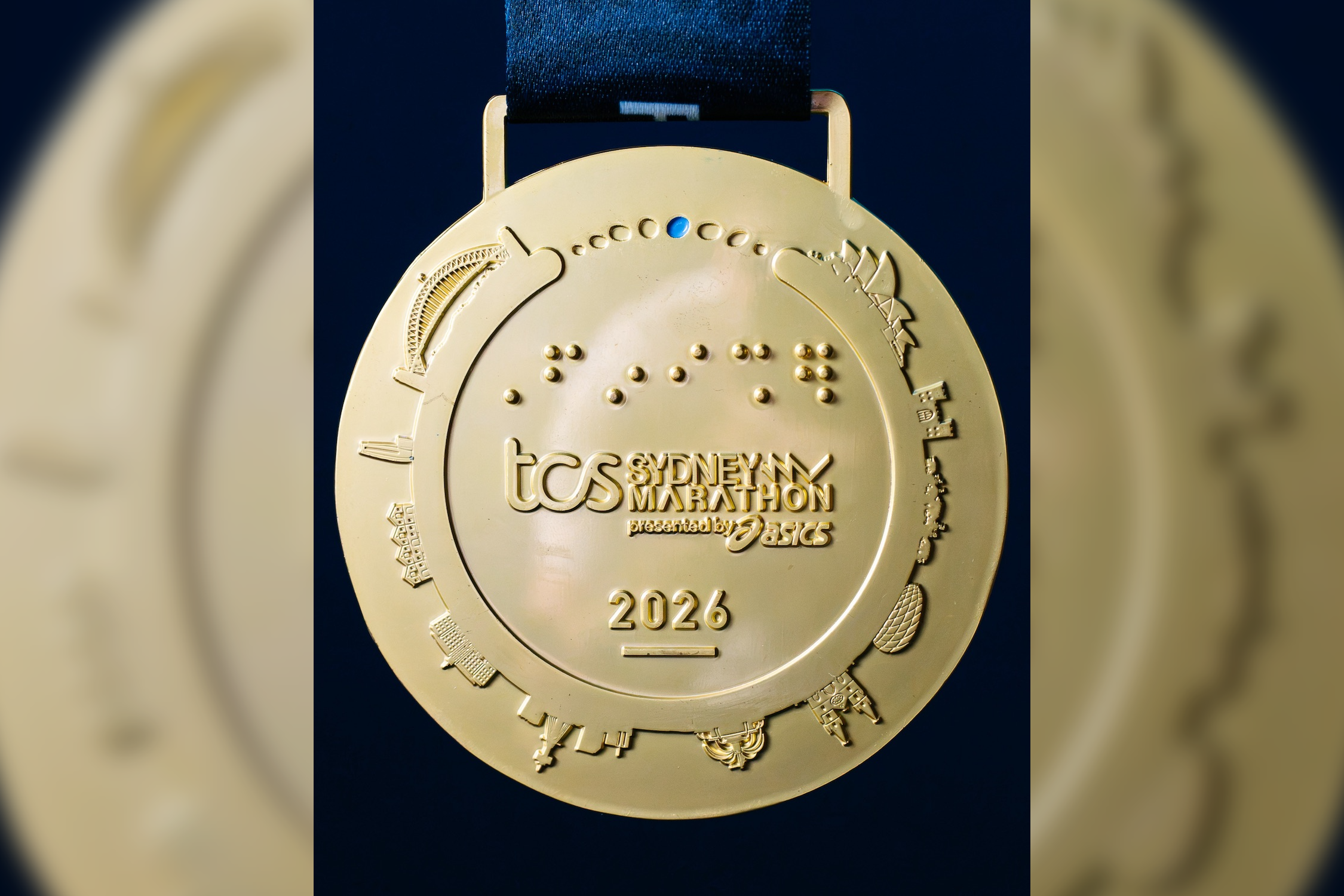
Alongside the Sydney Harbour Bridge, the Opera House and the other buildings that make up the skyline engraved on the medal for runners in the marathon on 30 August is a stadium that has nothing to do with the Australian city. It was meant to be the Allianz Stadium in Moore Park, one of the venues passed by the course. Instead, the Allianz Arena in Munich, home of Bayern Munich, found its way onto the medal. The mistake was spotted after organisers unveiled the design on social media at the beginning of last week.
Nor are the two buildings particularly easy to confuse. Germany’s Allianz Arena, designed by Swiss architects Herzog & de Meuron and opened in 2005, is instantly recognisable for the vast curved surface enclosing the stadium. Its exterior is made up of 2,784 air-filled membrane cushions and can be illuminated from within. Sydney’s Allianz Stadium is an entirely different structure: the current venue, designed by Cox Architecture, opened in 2022 after the demolition of the old Sydney Football Stadium.
The obvious detail that may have caused the confusion is that both stadiums carry the Allianz name for sponsorship reasons. That, however, remains only the most intuitive explanation. The marathon organisers have not said how the mistake actually happened.
Once images of the medal began circulating online, the TCS Sydney Marathon acknowledged the error. A spokesman described it as an “unfortunate error” and joked that a little too much “international flavour” had made its way onto the medal. With only a week to go before the race, however, the decision has been made: the medals will not be replaced. The ones already produced will be handed to runners who complete the 42.195 kilometres. According to the organisers, the mistake may even have made them “a little more unique”. And they are, in fact, likely to become highly sought-after items.
Munich’s Allianz Arena also joined the conversation. The stadium’s official account responded with humour to its unexpected appearance at the Australian marathon, remarking that it was not exactly something they had expected to find on their “bingo card”.
There is, however, one point on which one of the artists involved in the project wanted to be very clear. Ambrose Killian, a First Nations artist who worked on the medal, publicly clarified that his contribution was limited to the side featuring the Indigenous artwork and to the ribbon. Killian had no involvement in designing the skyline in which the Allianz Arena appeared.
The clarification is far from insignificant. After his name had been associated with the medal as a whole, Killian explained on Instagram that he had played no part in creating the section containing the wrong stadium and stressed the originality of his own work.
One part of the story therefore remains untold. The organisers have not disclosed who designed the skyline featuring the city’s landmarks, which company physically produced the medals or at what stage of the process the image of the German stadium was introduced. Nor have they explained how the design passed through the approval process before tens of thousands of medals were produced.
That is probably the most curious part of the whole affair. The Allianz Arena is not some anonymous building taken from a stock image library: it is one of the most recognisable stadiums in European football, home to Bayern Munich and a venue used for major international competitions. Its distinctive façade makes the mistake visible even in an engraving only a few millimetres wide.
The medal itself had been designed with a remarkable number of references to both Sydney and the race. The skyline side depicts several places runners encounter along the route. Eight small circles, meanwhile, represent the eight marathons now part of the Abbott World Marathon Majors series: Tokyo, Boston, London, Sydney, Berlin, Chicago and New York, joined by Cape Town in June. The South African race passed its final assessment in May and will stage its first edition as a Major in 2027. Shanghai remains a candidate to become the ninth.
Sydney’s place in the series is itself relatively recent. After completing the Abbott World Marathon Majors assessment process, the Australian marathon was admitted in November 2024 and on 31 August 2025 staged its first edition with Major status. Around 35,000 people from more than 100 countries ran that race. Sydney had joined the six established marathons in the series: Tokyo, Boston, London, Berlin, Chicago and New York.
The Australian race also has a history directly linked to the Sydney 2000 Olympic Games. Abbott World Marathon Majors describes it as the only mass-participation event still in existence that was created as a legacy of those Olympics. The current course passes through some of the city’s best-known locations: competitors will start on Sunday 30 August in North Sydney, cross the Harbour Bridge, run towards the city centre and Centennial Park, and finish in front of the Sydney Opera House. The official distance is 42.195 kilometres and the race holds World Athletics Platinum status.
This year, organisers have increased the field to around 40,000 runners. According to Inside the Games, there were approximately 123,000 applications, 56 per cent more than the previous year, meaning that most places had to be allocated by ballot. Participants will come from more than 140 countries.
For all of them, the medal will remain exactly as it is. There will be no last-minute correction and no replacement version. At this stage, after all, a reprint would mean producing and distributing around 40,000 new medals within a matter of days.
So on Sunday, after months of preparation and 42 kilometres through Sydney, those who cross the finish line in front of the Opera House will receive a medal that is likely to be remembered more than most. In the middle of the Australian city’s skyline, perfectly recognisable, there will still be a piece of Munich.