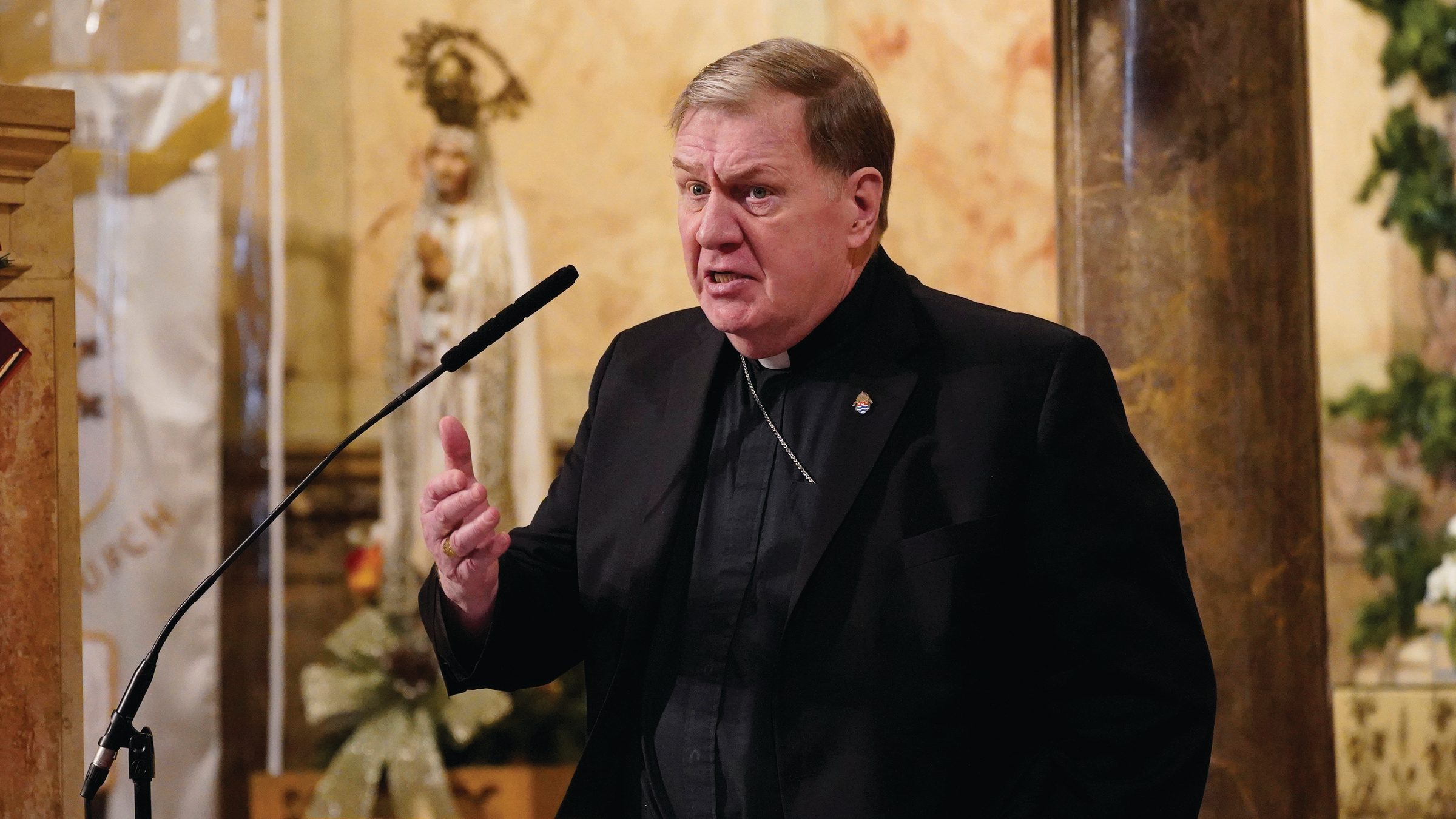
Cardinal Joseph William Tobin, Archbishop of Newark, has reflected on the meaning of war in the light of Catholic teaching, reaffirming the Church’s unequivocal preference for peace and urging the faithful to reject any attempt to glorify or romanticise armed conflict.
His message begins with a passage from the Second Vatican Council’s pastoral constitution Gaudium et spes: for as long as humanity remains marked by sin, the threat of war will continue to hang over it; but insofar as sin can be overcome through charity, violence itself can also be overcome.
For Tobin, war is a direct consequence of sin and destroys the harmony and moral order that God intended to exist among individuals, nations and peoples. The cardinal describes it as ‘always evil’, even when it is undertaken out of necessity to protect human life or restore peace.
The archbishop acknowledges that there may be circumstances in which military action becomes unavoidable. This, however, does not make war something to be welcomed or celebrated. Every conflict devastates human life, particularly the lives of innocent people, and destroys homes, businesses, hospitals, schools and places of worship.
The expression ‘war is hell’, Tobin observes, accurately conveys the horror and chaos caused by warfare. The danger is greater still in the nuclear age, when states possess destructive capabilities whose consequences may prove extremely difficult to contain.
The Just War Doctrine
In his message, the cardinal also addresses the traditional Catholic doctrine of just war. Tobin continues to regard it as a useful framework for determining whether military action can be morally justified, but only under very strict and limited conditions.
According to the Archbishop of Newark, however, the changing nature of modern warfare makes it necessary to consider whether this doctrinal framework remains adequate. Referring to Pope Leo XIV’s remarks, the cardinal says that the teaching may need to be reconsidered and updated to take account of new historical and technological circumstances.
The cardinal points in particular to the use of unmanned drones powered by artificial intelligence. Weapons capable of selecting or striking targets with increasing degrees of autonomy raise unprecedented questions about moral responsibility: it is necessary to establish who should be held accountable for decisions made through automated systems and how far judgements that may result in the death of human beings can legitimately be delegated to a machine.
Tobin’s reflection therefore extends beyond the question of when war might be tolerated. He also stresses the Church’s responsibility to uphold a vision of peace that goes far beyond the mere cessation of hostilities.
Peace as communion
For the archbishop, Christian peace cannot be reduced to social stability or a temporary absence of armed conflict. It is directed towards communion with God and the true good of the human person.
The biblical term shalom, cited in the message, refers to a state of perfect communion with God. Peacemaking therefore springs from humility, gentleness, forgiveness and mercy. These inner dispositions must be reflected in relationships between individuals and among peoples.
Tobin contrasts this vision with belligerence and warmongering. Echoing Leo XIV’s appeal, the cardinal calls for an end to the romanticisation of war and its symbols. The heroism of those who have fought against tyranny and injustice deserves to be recognised, but such recognition must never become a celebration of warfare itself.
War, Tobin writes, is not glorious. The sacrifice of members of the armed forces and of civilian populations caught up in conflict must be distinguished from the violence of war, which retains its full moral gravity.
Renouncing vengeance
True peace, according to the cardinal, requires people to abandon egoism, false pride and vengeance. It demands gentleness, humility and a willingness to forgive, even when instinct urges them to demand severe punishment for those who have insulted or injured them.
Tobin acknowledges that Christian teaching can appear counter-intuitive. When people suffer harm, their immediate response is often to retaliate. The Gospel instead teaches that love can overcome evil, while aggression creates further hostility and lays the ground for renewed violence.
The Christian thinkers who developed the Just War Doctrine, the cardinal stresses, should also be understood as peacemakers. They recognised the regrettable need to defend communities against forces capable of destroying their lives and possessions, but remained adamant that war was evil and that peace required restraint and forgiveness.
From this perspective, Pope Leo XIV’s appeal for an end to the fighting and the beginning of serious dialogue is not, in Tobin’s view, naïve. The Pope stands within the tradition of Christ and the saints, seeking to build the kingdom of peace here and now.
The condemnation of the arms race
Finally, the message recalls the Second Vatican Council’s condemnation of the arms race. Gaudium et spes describes it as one of the greatest curses afflicting humanity and emphasises that its economic and social consequences fall above all on the poor.
The vast resources devoted to armaments are diverted from the protection of life, the fight against poverty, education and the care of the most vulnerable. Tobin places Leo XIV’s teaching in continuity with this conciliar position and invites all people of good will to embrace the vision of the prophet Isaiah: to beat swords into ploughshares and spears into pruning hooks, so that nation shall no longer lift up sword against nation.
The Church’s responsibility, the cardinal concludes, is always to advocate justice, charity and lasting peace. The recurrence of war throughout human history must be recognised as a consequence of humanity’s sinful condition, without allowing repeated exposure to conflict to lead to indifference or desensitisation.
The Christian community is called to support those who work to build, preserve and defend the conditions that make peace possible. Tobin concludes by entrusting this mission to Jesus Christ, the Prince of Peace, asking him to inspire believers to pursue justice through charity and to pray for an enduring reconciliation.